
What AthlonX Actually Is
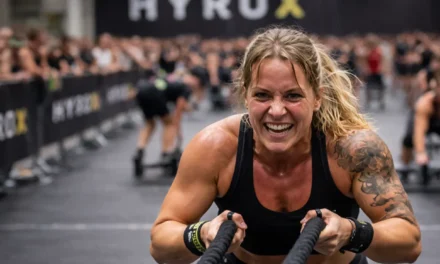
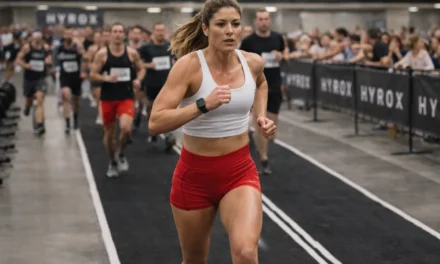
AthlonX is built around pressure. It’s a hybrid race where you don’t get time to settle, because every 400 meters the demand changes — and you’re forced to respond immediately. You run, you enter a Track, and you go straight back into it again.
The structure itself is simple: 400 m run followed by one Track, repeated 10 times. But that simplicity is deceptive. There are no long phases to recover, no extended pacing zones — just continuous exposure to effort that keeps building without pause.
AthlonX doesn’t give you space to manage the race slowly. It forces you to stay engaged from start to finish. Across the event, you complete 4 km of running and 10 Tracks in a fixed order, each one bringing a different demand — strength, engine, coordination — requiring you to reset quickly and move again without hesitation.
For a broader perspective on how it fits into modern competition, see our complete overview of the [Hybrid Competition Landscape].
Why AthlonX Feels Different
AthlonX is not about control — it’s about handling pressure. There’s no long rhythm to hold and no extended pacing strategy to fall back on. Every few minutes, the race asks a different question, and you have to answer it instantly.
The effort builds fast — and it stays there. You move between running and high-demand Tracks without real recovery. Your breathing spikes, your legs load up, your grip fades — and before anything settles, you’re already back into the next effort.
This isn’t gradual fatigue. It’s constant exposure. The athletes who perform best aren’t just strong or fast — they’re the ones who can stay composed when things stop feeling controlled.
How the Race Works: Structure and Tracks
The format is clear. The execution is not.
AthlonX Tracks Overview
| Track | Exercise | Format | Open | Pro | Pairs | Teams |
|---|---|---|---|---|---|---|
| 1 | RowErg | Calories | 25 | 50 | 50 | 50 |
| 2 | SkiErg | Calories | 25 | 50 | 50 | 50 |
| 3 | Air Bike | Calories | 25 | 50 | 50 | 50 |
| 4 | Sled Pull / Push | 50 m (12.5m segments) | 90 / 65 kg | 120 / 90 kg | 90 / 65 / 65 kg | 65 kg |
| 5 | Husafell Sandbag Carry | 100 m | 100 / 50 lb | 150 / 100 lb | 100 / 50 / 50 lb | 50 lb |
| 6 | Pig Flip | 25 m | +20 / 0 kg | +40 / 20 kg | +20 / 0 / 0 kg | 0 kg |
| 7 | Sandbag Clean & Jerk | 25 reps | 20 / 15 kg | 30 / 20 kg | 20 / 15 / 15 kg | 15 kg |
| 8 | Sandbag Walking Lunges | 50 m | 20 / 15 kg | 30 / 20 kg | 20 / 15 / 15 kg | 15 kg |
| 9 | Wall Balls | 50 reps | 9 / 6 kg | 12 / 9 kg | 9 / 6 / 6 kg | 6 kg |
| 10 | Burpee Box Jump Over | 25 reps | Step allowed | No step | Mixed rules | Step allowed |
Note: Loads vary by division and gender. Always confirm official standards before competition.
You run 400 meters, complete a Track, and repeat that cycle 10 times in a fixed sequence defined by the event.
Each Track must be completed according to specific standards, loads and repetitions for your category. There are no shortcuts, no skipped elements, and no flexibility in the order.
Tracks start and finish at designated points under the supervision of judges (Watchers), ensuring that every movement meets the required standard. If something isn’t done correctly, it doesn’t count.
This creates a race environment where execution matters as much as effort. You’re not just racing the clock — you’re racing under control.
Typical Times and Performance Benchmarks
AthlonX sits in a high-intensity performance window. Competitive athletes typically complete the race in around 40–55 minutes, depending on category and execution, while Open categories show a wider variation based on pacing and experience.
For Pro, entry already requires a certain level: SUB 42 minutes (men) and SUB 50 minutes (women) in Open, or prior Pro participation. This sets a clear expectation — AthlonX is accessible, but performance-driven.
The focus isn’t on global comparison yet, but on how well you handle the format under pressure.
Categories and Divisions: Competitive Structure
AthlonX builds competition through categories, not by changing the race itself. The structure remains the same — what changes is the demand.
Individual Categories include Open, as an accessible entry level divided into age groups (16–24, 25–29, 30–34, up to 55+), and Pro, the highest competitive level with limited spots and direct competition between top athletes.
Pairs are available in Male, Female and Mixed formats, including Pro categories, where the workload is shared but the structure remains identical — creating different pacing dynamics.
Teams (2+1), formed by two men and one woman, combine efforts across the race, adding a more strategic layer while maintaining the same level of demand.
The race stays the same. The pressure changes.
Best Preparation Approach
Preparing for AthlonX means preparing for intensity you can’t escape. It’s not enough to have an engine — you need the ability to use it repeatedly under stress.
Short intervals matter, but fast transitions matter even more. Training should reflect the race: repeated efforts without full recovery, rapid switches between modalities, and fatigue that never fully clears before the next block.
This is not about holding pace — it’s about surviving repeated disruption. Strength training also shifts in focus. It’s no longer about maximum output, but about maintaining output when fatigue is already high.
Pacing becomes naturally aggressive, and that’s where most mistakes happen. Go too hard early, and the race closes on you fast. The best athletes don’t slow down — they manage how much they lose.
You don’t train for longer. You train to stay effective when things get hard quickly.
AthlonX Events: Locations, Registration & Planning
AthlonX is an emerging competition format with a strong presence in Spain. Events are typically organized in controlled environments that combine running loops with structured Track zones, creating a direct and highly competitive atmosphere for both athletes and spectators.
Registration is handled online, with categories and waves organized by level. Because of limited capacity and the competitive structure, events tend to fill up quickly — making early planning part of the process.
Equipment & Gear: What Actually Matters
In AthlonX, gear supports execution — but it won’t save you. Shoes need to balance running efficiency with stability under load, as transitions are frequent and both comfort and control matter.
Grip becomes a limiting factor faster than expected, since Tracks demand consistency, not just strength. Given the early intensity of the race, energy management also matters — not in complexity, but in consistency.
Start the race already hydrated. Small, consistent fluid intake in the hours before competition is more effective than trying to “catch up” last minute. Electrolytes can support fluid balance and help maintain output, especially in high-intensity formats or warmer conditions.
Quick carbohydrates can also play a role. Simple sources like energy gels or easily digestible carbs taken before the start — or early in the race — can help stabilize energy levels without adding digestive stress. The key is to keep it familiar and minimal.
The goal is not to fuel more — it’s to avoid unnecessary drops in performance. Small, well-timed decisions often make the biggest difference.
The Bigger Picture
AthlonX brings a different energy to hybrid racing. It’s not about perfect structure or smooth rhythm — it’s about pressure, execution and intensity.
It places athletes in a space where decisions matter, standards matter, and fatigue arrives early. There’s no place to hide.
And that’s exactly what defines it.
🖤 Be Baddazz.