

There’s a moment happening right now in functional fitness that honestly feels surprisingly healthy: parents run HYROX, kids watch, kids get curious, and kids want in.
That’s exactly where HYROX Youngstars comes in.
HYROX Youngstars is the youth version of the global fitness racing format. The concept stays recognizable: running intervals combined with functional workout stations. But the entire structure is scaled for children and teenagers between 8 and 15 years old. Distances become shorter, loads become lighter, and movements become more age-appropriate. At least in theory.
Because the moment kids enter the fitness world, adults tend to ruin things surprisingly fast. Some parents already discuss “performance optimization” for 10-year-olds. Others panic the second they hear words like resistance training, sled pull or weighted carries because they still imagine outdated myths about growth plates exploding inside the gym.
Reality — as usual — sits somewhere in the middle.
The interesting thing is that modern sports science has completely changed its position on youth strength training over the last twenty years. Most pediatric sports medicine organizations today agree on one central point: properly supervised resistance training for children is not only considered safe, but beneficial for long-term athletic development.
The keyword is properly. Not maximal, not competitive, not ego-driven, and definitely not “my kid needs a six-pack before middle school.” Properly supervised. And that changes everything.
What Is HYROX Youngstars?
HYROX Youngstars is designed for children and teenagers from 8 to 15 years old. Like the adult race, it combines running with functional workout stations. Unlike the adult race, it does not ask children to perform adult-level strength tasks in smaller shoes.
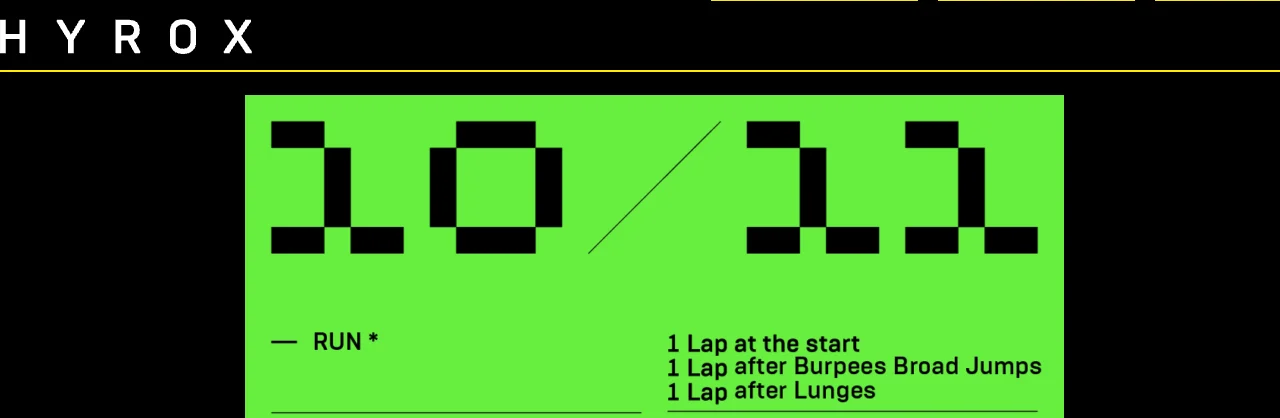
The official age groups are 8–9, 10–11, 12–13 and 14–15 years. The older the children get, the more the format starts to resemble “real” HYROX training. But the central idea remains the same: kids should develop confidence, endurance, coordination and functional strength without being pushed into adult performance standards too early.
Why Children Shouldn’t Train Like Adults
One of the biggest misunderstandings around HYROX Youngstars is the idea that children simply need lighter adult workouts. That’s not how developing bodies work.
Children are not small adults with shorter legs. Their nervous systems, bones, connective tissue and hormonal responses are still developing, and all of those systems adapt at different speeds. For younger children, especially under 10, the nervous system develops faster than muscular strength itself. That means kids often improve coordination and movement efficiency very quickly, while their actual force production capacity remains relatively limited.
This is why younger children are often surprisingly agile but struggle with sustained heavy resistance. The issue is not usually muscle damage. The bigger concern is movement quality under fatigue. When children lose posture under load, the body compensates in ways that increase stress on joints, tendons and developing structures. That’s why youth training guidelines focus heavily on technical control instead of weight progression.
In simple terms: a child should never look like they’re surviving a movement. They should look like they’re controlling it.
Ages 8–9: Coordination Is the Real Superpower
This age group is honestly the most misunderstood in youth fitness. Parents often think children need “strength training.” In reality, eight-year-olds primarily need movement literacy. They need to learn how to jump, land, rotate, decelerate, balance, change direction and coordinate upper and lower body movement. That’s why the HYROX Youngstars programming for younger kids stays relatively conservative. The loads are intentionally light because the race is not designed to test maximal strength. It is designed to develop athletic confidence.
And scientifically, that makes perfect sense. At this stage, explosive bodyweight movement develops neuromuscular coordination far more effectively than external load progression. Children improve faster from varied movement patterns than from repetitive heavy resistance. This is also why exercises like shuttle runs, frog jumps and obstacle work are so valuable. They improve proprioception, footwork, reactive coordination, cardiovascular endurance and movement timing — all of which later become extremely important in HYROX.
Even something as simple as skipping rope suddenly becomes useful here. Not because HYROX contains jump rope stations — it doesn’t — but because skipping improves rhythm, ankle stiffness, elastic energy transfer, coordination under fatigue and running efficiency. That means the child who casually skips rope twice a week often develops better running mechanics without ever doing “running drills.”
That’s how youth athletic development works best: indirectly.
So Is Sled Pull Safe for Kids?
This is probably the question parents search for most — usually right after watching their child drag something heavy for the first time. And surprisingly, sled work is often safer than traditional heavy lifting when it is scaled properly.
Sled training can be relatively joint-friendly because it has low eccentric loading, controlled movement speed, limited spinal compression, reduced impact forces and natural full-body force transfer. The real problem is not the sled itself. The problem is adult ego applied to children.
A lightly loaded sled teaches posture, bracing, force application, leg drive and coordination. An overloaded sled teaches compensation patterns and frustration. That distinction matters enormously.
For younger children, alternatives often work even better anyway. Towel drags on grass, resistance-band pulling games, partner-resisted walks, hill marches or very light tire drags can all prepare the same qualities needed for sled work: leg drive, trunk stability, grip, coordination and controlled force production.
The funny thing? Most kids don’t even care whether it’s an “official HYROX sled.” They care whether training feels playful. Adults are the ones obsessed with authenticity.
Ages 10–11: The “I Want To Train Like You” Phase
This is usually where things become emotionally dangerous for parents, because children in this age range suddenly become highly motivated. They want structure. They imitate adults. They want “real workouts.” And that’s actually a fantastic moment — if parents stay patient.
At this age, movement patterns usually become more stable, attention span improves and cardiovascular capacity increases noticeably. Children can tolerate longer sessions and more structured intervals. But physiologically, they still fatigue differently from adults. Their anaerobic systems are less developed, which means repeated maximal intensity efforts become harder to recover from. Children also generate less absolute force than adults, which sounds obvious, but changes how resistance training should look. The goal is not progressive overload in the bodybuilding sense. The goal is movement efficiency under moderate challenge.
That’s why wall balls, rowing intervals and farmer carries suddenly become excellent tools. Not because they create “functional fitness monsters,” but because they integrate multiple athletic qualities at once: coordination, endurance, posture, grip strength, rhythm and pacing. And pacing is actually one of the hidden skills inside HYROX. Most children naturally sprint too hard at the beginning and implode later. Learning sustainable movement intensity becomes part of the athletic development process.
Ages 12–13: The Athletic Accelerator Phase
This is where parents suddenly think: “Wait… when did my child become athletic?”
Puberty changes everything. Strength improves faster, coordination sharpens, aerobic capacity increases and movement confidence often explodes. Because of hormonal changes, many children now become capable of handling more structured resistance training safely. This is also the age where science becomes very clear: supervised resistance training can significantly improve athletic performance and reduce injury risk in youth sports.
But — and this is the part social media conveniently ignores — adaptation capacity still varies enormously between individuals. One 13-year-old may safely handle kettlebell deadlifts and moderate sled work. Another may still struggle with basic movement control. Chronological age is not training age. That’s why good HYROX Youngstars preparation focuses less on weight numbers and more on movement standards.
Before increasing load, a young athlete should consistently demonstrate spinal stability, controlled deceleration, balanced movement, fatigue resistance and technical consistency. Otherwise heavier loading simply magnifies dysfunction.
And honestly? This is where many adults fail too.
Ages 14–15: Almost HYROX, Still Not Adult HYROX
In the oldest HYROX Youngstars group, training can become more structured and closer to the adult format. Teenagers can usually handle more consistent running intervals, rowing work, loaded carries, moderate sled training and longer mixed conditioning sessions. But even here, the same principle applies: maturity matters more than age on paper. A sporty 14-year-old with years of movement experience is not the same as a beginner who discovered HYROX three weeks ago on TikTok. Training should still prioritize technical quality, recovery and long-term development over race-day drama.
At this age, moderate resistance training can be appropriate, including goblet squats, kettlebell deadlifts, farmer carries, rowing intervals, wall balls and controlled sled work. What still does not belong here is maximal lifting, one-rep max testing or heavy barbell work without proper coaching.
Teenagers can train seriously. They just do not need to train stupidly.
The Gym Problem Nobody Talks About
Here’s the practical reality most parents hit immediately: many commercial gyms don’t allow children under 14. Sometimes they don’t allow minors under 16. Usually this has less to do with actual training science and more to do with insurance restrictions, liability concerns, supervision policies and licensing agreements. So parents suddenly assume HYROX Youngstars preparation becomes impossible.
It really doesn’t.
In fact, some of the best preparation happens outside commercial gyms entirely. Running outdoors develops more natural movement variability. Parks improve coordination better than fixed machines. Uneven terrain forces stabilizer activation automatically. Children also psychologically respond far better to dynamic environments than repetitive indoor setups.
A child doing hill sprints, shuttle runs and medicine ball throws in a park is often developing more transferable athleticism than a child moving between resistance machines under fluorescent lighting. The commercial fitness industry sometimes forgets this: children don’t need optimized equipment nearly as much as they need diverse movement experiences.
How To Replace Gym Equipment for HYROX Youngstars Training
If your child cannot enter a gym yet, you can still prepare almost every HYROX-relevant quality with simple alternatives.
A skipping rope helps with running efficiency, rhythm, ankle stiffness and coordination under fatigue. Shuttle runs help with pacing, acceleration, braking and direction changes. Hill walks or hill pushes can replace sled work by training leg drive and trunk stability. Farmer carries can be done with small kettlebells, water canisters, sandbags or even loaded backpacks. Wall ball preparation can start with light medicine ball throws, squat-to-throw drills or simple target throws against a safe wall.
For rowing, the replacement depends on access. If you have no rowing machine, focus on low-impact conditioning and posterior-chain strength: bear crawls, band rows, light kettlebell deadlifts, crawling games and controlled running intervals all support the same general engine and body control needed for the race.
No, it is not a perfect one-to-one replacement. But for children, it doesn’t have to be. The goal is not to replicate every race station with adult-level precision. The goal is to build the athletic qualities behind them.
How To Train Together Without Becoming “That Parent”
This may actually be the most important part of all.
HYROX Youngstars works best when families train with children instead of coaching at them.
That changes the emotional dynamic completely. The moment training becomes constant correction, performance pressure or social media content production, children usually disconnect from movement surprisingly quickly. The best family sessions are rarely perfect. They are messy, playful, competitive in a funny way and chaotic sometimes. And that’s good, because long-term athletic development is heavily influenced by emotional association. Children who connect movement with fun, confidence, bonding, autonomy and exploration are dramatically more likely to remain physically active later in life. That matters far more than race rankings at age eleven.
And honestly? Most kids will never remember their HYROX finish time anyway. But they will remember whether training together felt exciting or exhausting.
The Bottom Line
HYROX Youngstars can be a brilliant way to introduce children to functional fitness, endurance training and healthy competition. But the value of the format depends entirely on how adults frame it. If parents treat it like a miniature elite performance project, they miss the point. If they use it as an opportunity to move, laugh, train and learn together, it becomes something far more powerful than a race.
Kids do not need to be pushed into HYROX. They need to be invited into movement.
And if they happen to beat you in the final shuttle run one day?
Good. That was always the plan.