

Stephanie Case had planned to stop for warmth every ten loops. After eight, her balaclava had iced up so badly that she could no longer breathe through it. The warming tent could not wait.
That interruption, described in her interview with CBC, reproduced here, was part of a race in which the Canadian ultrarunner was pursuing more than a first. At the Antarctic Ice Ultra on November 8, 2026, Case wanted to challenge the existing overall Antarctic 100-mile benchmark—not simply establish a women’s time where the organizer had none.
She finished in 17 hours, 31 minutes and 39 seconds. That was more than five hours faster than the previous mark. It was also only the second-fastest performance of the race.
Yusheng Ni, the holder of that earlier benchmark, finished in 17:02:24. Case was 29 minutes and 15 seconds behind him. Both had gone substantially faster than his 2025 time; only Ni left with the new overall record.
The distinction matters because the most obvious description of Case’s achievement—the first woman to finish the event’s 100-mile race—does not fully describe the competition she entered. The women’s benchmark was unoccupied. The overall one was not.
A target with a name and a time
The organizer’s pre-race profile and official results establish both Case’s intention to challenge the overall record and where she ultimately finished. This was not an ambition inferred afterwards from a strong result. The target was there before the start: Ni’s 22:40:47, set in 2025.
Case improved on that time by 5:09:08. Ni improved on it by 5:38:23. Those are striking changes, but the available reporting does not establish why both runners were so much faster than the previous benchmark. It would be premature to assign the improvement to conditions, preparation, equipment or any other single explanation.
What the results do establish is a direct comparison within the same race. Case placed second among four 100-mile finishers. She did not win the mixed field, and she did not hold the overall record at the end of the event. Her performance nevertheless cleared the time she had set out to challenge by a substantial margin.
That makes this a more interesting result than either of two shortcuts would suggest. Calling it only a women’s first leaves out the competitive target. Treating it as an outright victory would erase the runner who finished ahead of her.
According to Anadolu’s race report, eight runners started the 100-mile distance, including three women. Case was the only woman to finish. Half the starting field completed the race.
Those numbers give the result its scale. This was a small competition, not a deep championship field. It was also a race in which reaching the finish was far from automatic. Neither fact cancels the other.
Thirty-eight loops, and a plan that changed
The course comprised 38 laps of approximately 4.2 kilometres, plus an additional section, according to Anadolu. Rather than a single journey across the continent, the race required repeated circuits of the same course.
Case’s planned warming stops belonged to that lap-by-lap structure: ten loops, then a break for warmth. But the iced-over balaclava forced her to bring the first stop forward by two laps. Her account supplies a specific example of what managing this race required. The schedule she had chosen became secondary to an immediate problem with her face covering.
The race timetable had already changed before she began. Case told CBC that the start was moved to 1 a.m. because of an approaching storm. The two decisions—an earlier start and an earlier warming stop—are useful correctives to any account that reduces the event to distance and finishing time. The clock measured the whole effort, including the stops needed to continue it.
They also clarify what “nonstop” can mean in an ultramarathon. It does not mean that Case ran without pausing for more than 17 hours. Her own account includes the warming tent. A continuous race clock and uninterrupted running are different things; acknowledging the stop makes the account more accurate, not the performance less substantial.
CBC also reported that Case’s daughter watched her finish by livestream. It was a family connection to a remote finish line, but the sporting result needs no embellishment: 100 miles completed, second overall, and the first women’s finish in the event’s history.
The organizer describes the performance as an Antarctic women’s 100-mile record. That broader geographical claim should remain attributed. Its account documents the history of its named events; it is not, by itself, an exhaustive register of every independently documented Antarctic expedition or distance attempt.
The narrower claim is clear: Case became the Antarctic Ice Ultra’s first woman to finish its 100-mile race. The broader record designation is the organizer’s. There is no need to blur the two to make the result worth attention.
Who gets to contest the next mark?
There is another number alongside the finishing times: $19,500. That was the published 2026 entry fee, including the Antarctic flight, accommodation and race entry.
It does not establish what Case personally paid, whether she had sponsorship or how any other entrant financed the trip. It does establish that access to this particular record attempt carries a substantial published price. The package includes much more than a place on a starting line, but that does not make its cost irrelevant to who can reach that line.
A field of eight cannot reveal how many capable runners might challenge the benchmark under different circumstances. Nor can one woman’s second-place finish settle a question about women’s and men’s endurance physiology. This result is evidence of what Case achieved against these competitors, on this course, in this edition—not a population-level test.
The opportunity to contest the record is therefore part of its story. A first finisher establishes a mark that future runners can pursue. How quickly that mark improves will depend on who enters and what they do, not simply on how much faster it might be possible to run.
Case arrived with an existing overall time to beat and finished more than five hours inside it. The reason she did not leave with that record was not that her target proved unreachable. It was that Ni reached the finish 29 minutes and 15 seconds sooner. The next woman to challenge Case’s 17:31:39 will have a women’s benchmark to chase—and an overall benchmark less than half an hour ahead of it.
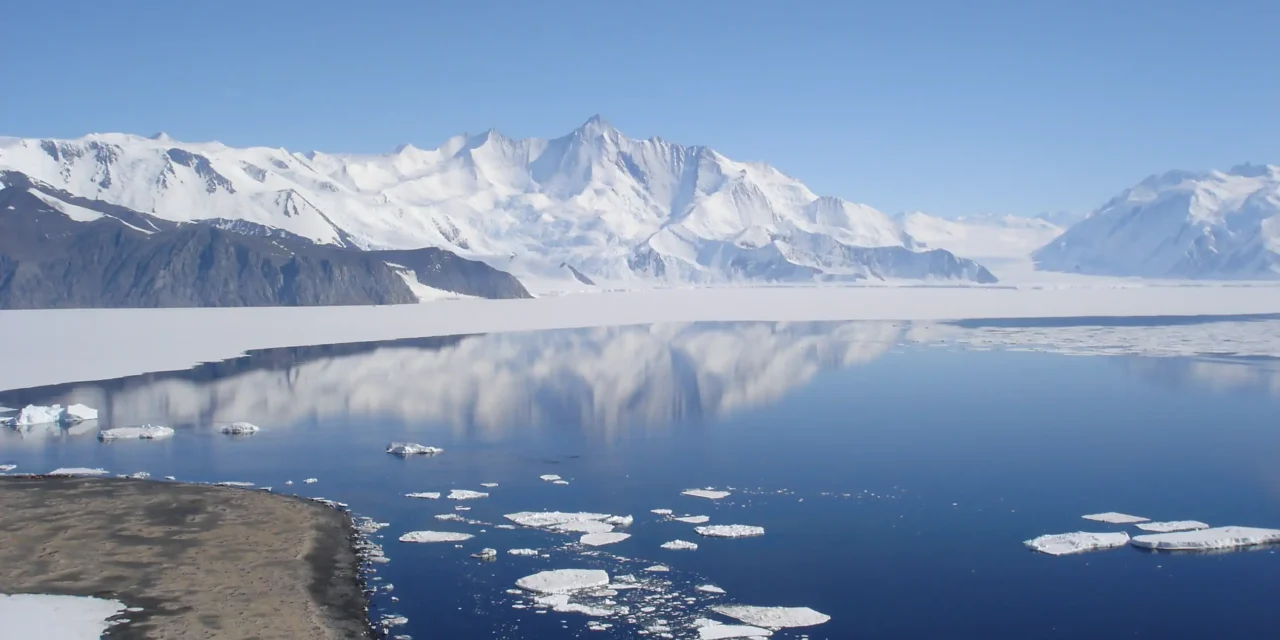
Photo taken by Andrew Mandemaker.