


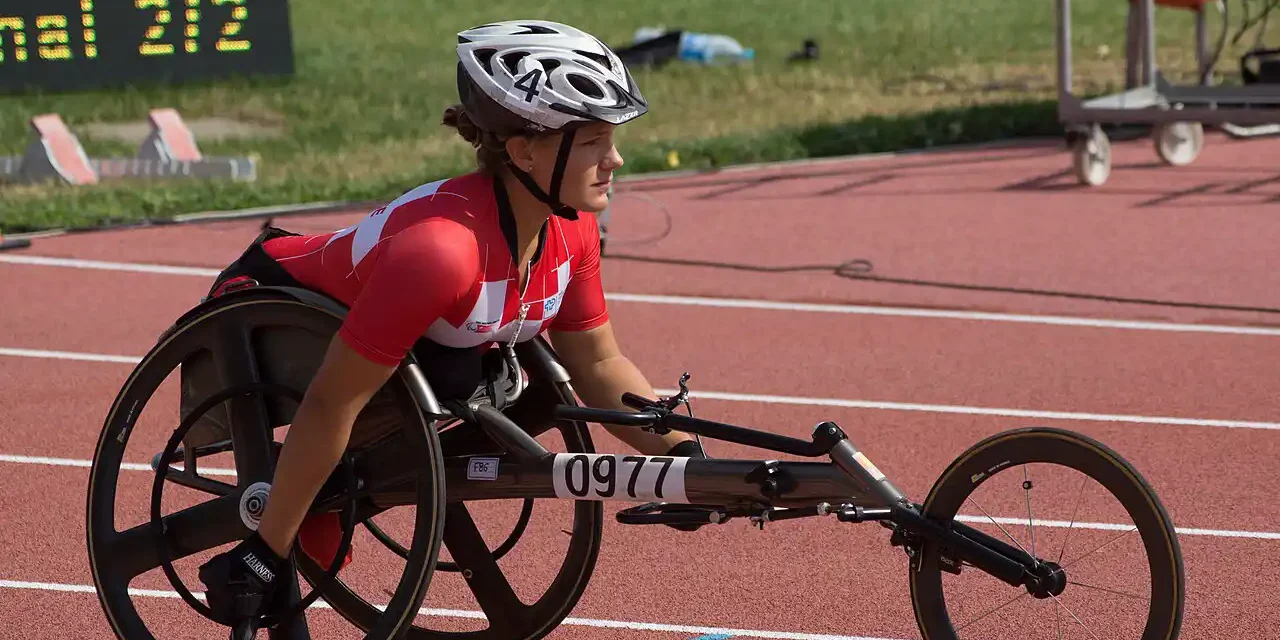
Ten kilometres into the New York City Marathon, Catherine Debrunner was already 2 minutes and 8 seconds ahead of the women chasing her. More than three-quarters of the race remained. By the finish, the gap to second place would be 8:26.
Debrunner won the women’s wheelchair division on November 1 in 1:40:02. Tatyana McFadden finished second in 1:48:28; Susannah Scaroni arrived four seconds later. Those results and the early split, reported by World Para Athletics, capture two very different contests: Debrunner’s race out front, and a much closer fight for the remaining podium places.
For Debrunner, it was the second extraordinary result in three weeks. On October 11, she had won Chicago in 1:33:16, cutting exactly a minute from her own women’s T54 marathon world record. In New York, she did not break a record. Instead, she produced the fifth-largest winning margin in the history of the women’s wheelchair division, according to race organiser New York Road Runners.
One performance changed the record book. The other measured the distance between Debrunner and her nearest competitors on the day. Together, they made an exceptional month—but not quite the simple story of an athlete getting faster every time she raced.
A lead that became eight minutes
The 10km checkpoint offers the first clear measure of Debrunner’s separation in New York. A lead of 2:08 that early was already substantial. At the finish, it was almost four times as large.
Across the remaining 32.195 kilometres, the gap to the next finisher increased by a net 6:18. That calculation does not describe every move or fluctuation along the route. It does establish that the early advantage was not merely preserved: the final separation was considerably greater.
Behind her, McFadden and Scaroni were separated by just four seconds over the full marathon distance. Their finishing times give the podium its shape. Second and third were close together; first was more than eight minutes away.
It matters to name those athletes rather than leave Debrunner’s opposition as an anonymous field. This was a victory over McFadden and Scaroni, not simply a fast time recorded in isolation. Equally, their results cannot explain why the gap became so large. A finishing order establishes who prevailed, not the individual contribution of equipment, preparation, tactics or conditions.
New York Road Runners supplied the historical comparison: only four winning margins in the division’s New York history were larger. That is a more useful description than calling the result unprecedented. It was rare, but not without precedent.
There was another important qualification. Debrunner finished 30 seconds outside the course record of 1:39:32 that she had set in 2023. She had already travelled this course faster. What distinguished her 2026 victory was not a new New York best, but how far ahead she finished.
That contrast is central to understanding the month. Dominance over a field and speed against a historical benchmark can overlap, but they are not the same achievement. New York made the distinction unusually visible: a near-record performance for Debrunner, and an enormous margin over everyone else in the women’s division.
The record she had not expected
Chicago had delivered the other kind of result.
There, Debrunner’s 1:33:16 improved the world record she had established in Berlin in 2023. The reduction was exactly 60 seconds, from 1:34:16. It was not merely her fastest performance of the season or a course best: World Para Athletics reported it as a new women’s T54 marathon world record.
The surprise was that Debrunner had not expected Chicago to produce it. In her post-race comments reported by World Para Athletics, she said she considered the course technically challenging for wheelchair racers.
That assessment is worth retaining alongside the time. The record did not come on a course she had identified as an obvious opportunity to lower her mark. Her own expectation was more cautious than the eventual result.
World Para Athletics reported that she was already 48 seconds clear at 5km. As in New York three weeks later, a substantial lead was established early. But that split is evidence of where she stood in the race, not proof of a predetermined plan to attack from the start. The published reporting does not establish her pacing instructions or the decisions behind each section.
What the finish did establish was precise: Debrunner had taken a full minute off her own world record. New York would add a different distinction 21 days later.
The two finishing times should not be treated as interchangeable tests. Chicago’s 1:33:16 and New York’s 1:40:02 were recorded on different courses. The slower New York time is not evidence, by itself, of a decline in form; nor does the larger story require an explanation for every second between them. Each result has a relevant comparison of its own: the previous world record in Chicago, and the course record, opposition and historical winning margins in New York.
Exceptional, not invincible
New York was Debrunner’s fifth Abbott World Marathon Majors victory of 2026, according to World Para Athletics. That extends the story beyond two outstanding autumn performances. These wins belonged to a season of repeated success.
But it was not an unbeaten season. The same reporting notes that she finished second at Boston in April. Five major victories should not quietly become a claim that she won every major she entered. Boston is a useful limit on the language of inevitability that can gather around results as emphatic as New York’s.
There are limits, too, to what these races explain. Neither establishes a single reason for Debrunner’s advantage. The reports document the performances; they do not isolate a technical breakthrough, a training change or a physiological mechanism. Her early leads are measurable. The causes of her superiority cannot be apportioned from those splits alone.
That does not make the story less remarkable. It makes the achievement more specific. In Chicago, Debrunner surpassed a standard she had set herself, on a course she had not expected to yield a world record. In New York, she finished ahead of McFadden and Scaroni by a margin rarely seen in the event’s history, while remaining just outside her own course best.
The month’s clearest contrast is there in the numbers. Chicago took one minute off the world record. New York left that city’s course record intact by 30 seconds—and left the runner-up 8 minutes and 26 seconds behind.
Pic source: Fanny Schertzer