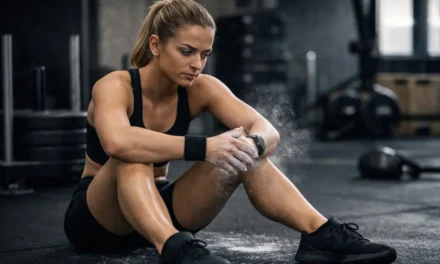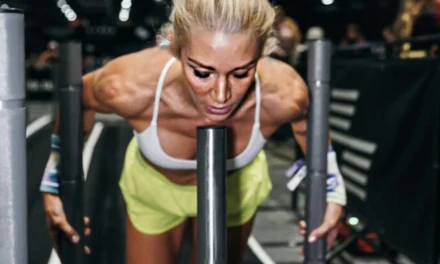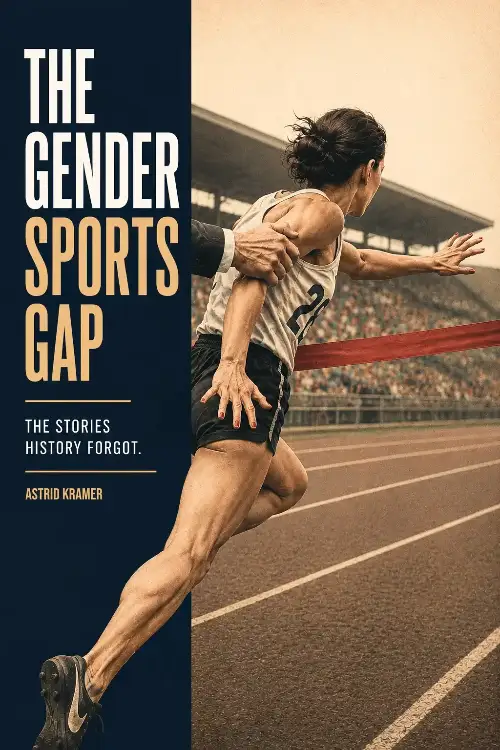


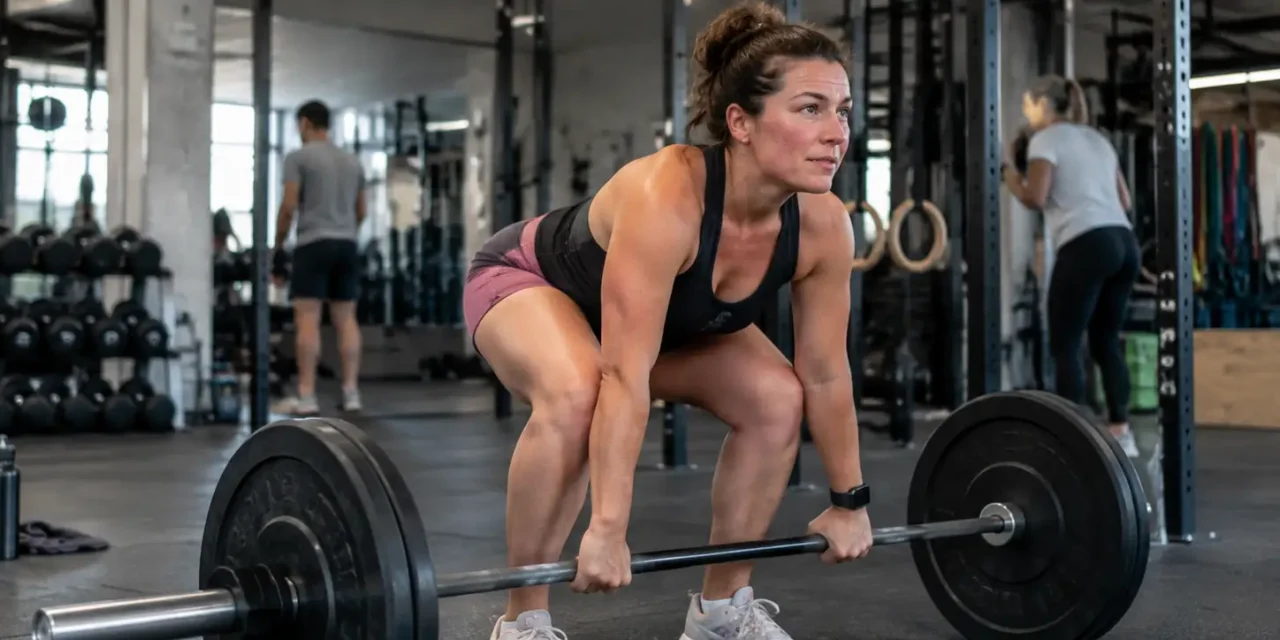
Apparently, it’s 2026, women are lifting heavier, running faster and claiming more space in sports than ever before, and we’re still having conversations about the length of their shorts. Not their performance, not their strength, not what they’re accomplishing in the gym. Their shorts. And, more specifically, the body parts those shorts happen to cover.
On October 10, comedian Shane Gillis hosted Saturday Night Live and delivered a monologue that included a joke about women’s gym clothing. “I haven’t been to the gym in so long I didn’t know women just dress like whores now?” he said, before describing the tight, brightly colored shorts he had apparently encountered and complaining about the expectation that men shouldn’t stare. The joke drew groans from the studio audience and subsequently sparked a public controversy.
Some people were offended. Others thought it was hilarious. Actor Dan Levy criticized the remark, while former SNL cast member Ego Nwodim responded with a wonderfully sarcastic gym photo. Meanwhile, comedian Dana Carvey defended the joke, questioning why it had caused such an uproar. And just like that, we found ourselves in another debate about whether comedy has gone too far, whether people have become too sensitive and whether women should simply learn to take a joke.
But perhaps we’re asking the wrong question. Because the interesting part isn’t whether Shane Gillis is funny. Comedy is subjective, and nobody needs another article explaining that comedians sometimes say offensive things. The interesting part is why women’s bodies remain such an irresistible subject of public judgment, even in places where those women are doing something entirely unrelated to anyone else’s entertainment.
Why, in 2026, are women still expected to justify what they wear while exercising?
The Gym Is Not a Public Referendum on Women’s Bodies
Let’s establish something that should be painfully obvious: women go to the gym for all kinds of reasons. Some want to build muscle, improve their cardiovascular fitness or prepare for a competition. Others want to lose weight, recover from an injury, manage stress or simply enjoy moving their bodies. Some love the social atmosphere. Some prefer to train alone. Some are beginners who barely know how to adjust the equipment, while others can deadlift more than the person currently judging their outfit.
And they all get to decide what they wear.
Maybe a woman chooses tight shorts because she finds them comfortable for squats. Maybe she prefers a particular fabric because it handles sweat well. Maybe she likes how her legs look. Maybe she spent an unreasonable amount of money on a matching set and intends to enjoy every cent of it. Maybe she simply woke up that morning and decided that pink scrunch shorts were exactly what she wanted to wear.
None of these explanations requires anyone’s approval.
What bothers me most about discussions like this is the immediate attempt to defend women’s clothing choices by proving that they’re practical. We explain that leggings allow freedom of movement, that fitted shorts prevent fabric from getting caught in equipment or that technical materials improve comfort during exercise. All perfectly reasonable arguments, but they accidentally reinforce the idea that a woman needs an acceptable reason to wear something that reveals her body.
She doesn’t.
A woman is allowed to dress for performance. She’s allowed to dress for comfort. She’s allowed to dress because she likes the color, the cut or the way her body looks in it. She can want to feel strong and attractive at the same time. These things are not mutually exclusive, and attractiveness does not somehow invalidate athletic ambition.
More importantly, choosing to wear revealing clothing is not an invitation for strangers to evaluate her character, question her intentions or treat her body as public property.
Women Have Been Fighting Over Sportswear for More Than a Century
One of the more amusing aspects of Gillis’ observation is the suggestion that revealing workout clothes are some shocking modern development. Anyone familiar with fitness culture in the 1980s might reasonably wonder whether he has ever encountered an aerobics video. Leotards, high-cut bodysuits, short shorts and brightly colored Lycra were central to the fitness boom decades before Instagram existed. Jane Fonda didn’t exactly build an exercise empire wearing oversized sweatpants. And as The Washington Post pointed out in its response to the controversy, tight and revealing athletic clothing has a much longer history than the current generation of gym influencers.
But the history of women’s sportswear also tells a less entertaining story. For generations, female athletes had to negotiate expectations about modesty, femininity and respectability while trying to participate in sports that were frequently considered unsuitable for them in the first place. Clothing was never merely clothing. It became a way of controlling which activities women could perform, how freely they could move and how they were expected to present themselves while doing so.
Long skirts and restrictive garments limited movement in some sports. As women gained access to more athletic opportunities, clothing gradually adapted to the physical demands of competition. Yet the criticism never disappeared. Outfits could be condemned for being too revealing, too masculine, too unfeminine or insufficiently attractive, sometimes within the very same sport.
The standards changed. The assumption that women’s appearance was everyone’s business remained remarkably persistent.
Today, female athletes still face scrutiny over their uniforms, whether they cover too much or too little. Gym-goers experience a similar contradiction on a smaller scale. A woman in baggy clothes may be told she isn’t making an effort. A woman in fitted clothes may be accused of seeking attention. A woman who wears makeup to train is supposedly more interested in her appearance than her performance. A woman who doesn’t may be criticized for looking unkempt.
At some point, we should probably acknowledge that the problem isn’t the outfit.
The Science Behind Feeling Judged at the Gym
It’s tempting to dismiss comments about gym clothing as harmless observations, especially when they’re presented as jokes. But there is a broader issue worth examining: the extent to which women already feel watched, evaluated and judged in fitness environments.
A 2025 study published in PLOS ONE, conducted by Emma S. Cowley and Jekaterina Schneider, explored women’s body image and experiences in gym settings. The researchers surveyed 279 women and identified several recurring themes, including perceived judgment about appearance and performance, concerns about clothing, harassment and safety, and the struggle to feel that they belonged in gym spaces.
One particularly revealing finding was the contradiction women experienced when choosing what to wear. Some worried about revealing perceived imperfections. Others feared looking inexperienced if they wore the wrong clothes. Some felt that dressing too well could undermine how seriously their training was taken. In other words, women could feel judged regardless of the choices they made.
The study was exploratory and relied on a nonrepresentative sample, so it cannot tell us how every woman experiences the gym. Nevertheless, it provides useful evidence that clothing-related judgment is not simply an imaginary problem invented by people who spend too much time on social media.
The researchers also identified experiences of empowerment. Women described gaining confidence through physical progress, challenging gender expectations and finding supportive training environments. That distinction matters because the gym can be both a place where women experience scrutiny and a place where they discover what their bodies are capable of achieving. And that is precisely why the culture surrounding fitness spaces deserves attention.
Imagine being a beginner who already feels intimidated by the weights section. You’re unsure about your technique, concerned about whether you’re using the equipment correctly and trying to convince yourself that you belong there. Now add the possibility that strangers are evaluating your body, your clothes or your presumed sexual intentions.
Not every woman will care. Some will shrug it off. Others will feel uncomfortable, change what they wear or avoid particular areas of the gym. The consequences are not identical for everyone, but the underlying expectation is the same: women must manage other people’s reactions while trying to exercise. That is an unnecessary burden in an environment that should encourage participation.
Looking Is Human. Respect Is a Choice.
There’s another part of the Gillis joke that deserves closer examination. His routine suggested that women wear attention-grabbing clothes while simultaneously expecting men not to look at them. The implied contradiction is familiar: if someone dresses attractively, surely they must want attention. And if they want attention, why should anyone be criticized for giving it? Except this argument confuses several very different things.
Noticing another person’s appearance is normal. Finding someone attractive is normal. Briefly looking at someone in a shared public space is not inherently disrespectful. Human beings have eyes, and nobody needs to pretend otherwise. But there is a meaningful difference between noticing someone and staring at them, making sexual comments, following them around a gym or assuming that their clothing gives you permission to behave in ways that make them uncomfortable.
That distinction is not particularly complicated. Most adults manage it successfully every day.
It’s also worth remembering that a woman who enjoys looking attractive is not necessarily trying to attract the attention of every person around her. She may be dressing for herself, for her own confidence, for a partner or simply because she likes fashion. Even if she genuinely enjoys being noticed, that doesn’t eliminate her right to decide which interactions she welcomes. And before anyone points out that some women film themselves in gyms, yes, they do. Some men do too. Recording other people without appropriate consideration can raise legitimate privacy and etiquette concerns, regardless of gender. But the existence of subjectively perceived annoying gym behavior doesn’t make it reasonable to attach a degrading label to women based on their shorts. These are separate issues. We can discuss both without pretending one justifies the other.
Can We Still Take a Joke? Absolutely.
Whenever a comedian faces criticism, the conversation tends to follow a predictable pattern. Someone makes an offensive joke. People object. Others complain that nobody is allowed to joke about anything anymore. Eventually, the original subject disappears beneath an argument about freedom of expression.
Personally, I don’t believe comedy needs to be polite, educational or universally agreeable. Some of the best comedy challenges social conventions, exposes hypocrisy and makes audiences uncomfortable. Comedians should be free to experiment with ideas, including ideas that some people find offensive.
Shane Gillis is entitled to make jokes about gym clothing. His audience is equally entitled to laugh, groan, criticize or switch channels. That’s how comedy works.
But freedom to tell a joke does not create an obligation for everyone else to find it funny. And describing something as comedy doesn’t automatically make its underlying assumptions immune to examination.
In fact, I think the most interesting question is whether the joke challenges a social expectation or simply repeats one that women have been hearing for generations. Because the idea that women who reveal too much of their bodies are somehow less respectable is hardly a daring new observation. It’s one of the oldest judgments in the book. You can laugh at the joke and still recognize that. You can enjoy Gillis’ comedy and disagree with this particular routine. You can dislike the joke without demanding that he lose his career. None of these positions is contradictory.
And women shouldn’t have to demonstrate their sense of humor by accepting every insult directed at them.
The Strongest Woman in the Gym Doesn’t Owe You Modesty
There’s something particularly frustrating about reducing women to their appearance in a place dedicated to physical achievement. We spend enormous amounts of time discussing how to encourage women to become stronger, more active and more confident. We celebrate female athletes breaking records, entering traditionally male-dominated sports and demonstrating extraordinary endurance. Yet the moment a woman walks into a gym wearing shorts that someone considers too revealing, the conversation can shift from what she is doing to what she looks like.
She might be preparing for her first 5K, recovering from childbirth, training for a HYROX competition or working toward a personal strength record. She might be experiencing one of the best training sessions of her life. She might also be having a terrible day and using exercise to feel a little better. And none of that is visible from the length of her shorts.
At BADDAZZ, we believe women deserve to be recognized for their achievements, their ambitions and their right to participate in sports on their own terms. That includes women who train in oversized shirts, women who wear compression leggings, women who love matching sets and women who prefer the shortest shorts they can find. It includes women who want to look attractive while they train, because wanting to look good does not make someone less serious about sports. And it includes women who couldn’t care less what they look like, because athletic participation should never come with an appearance requirement.
We don’t need to agree on fashion. We don’t need to wear the same clothes. We don’t even need to understand why someone else likes a particular style.
We simply need to stop treating those preferences as evidence of someone’s character.
The Real Question Isn’t What Women Wear
Perhaps the most disappointing thing about the Shane Gillis controversy is how familiar it all feels. The comedian, the provocative remark, the backlash, the defense of free speech and the inevitable accusations that everyone has become too sensitive. We’ve seen variations of this debate countless times, and we’ll probably see many more. But beneath the noise is a simple question worth asking: what kind of sports culture do we actually want?
One where women feel they have to calculate how much skin they’re allowed to show before someone questions their respectability? One where being attractive supposedly undermines athletic credibility? One where women are expected to explain their clothing choices before anyone will take their training seriously? Or one where the person in the squat rack is judged by how they treat others, whether they respect shared equipment and perhaps, if we’re feeling particularly ambitious, whether they put their weights away afterward?
Because those are the behaviors that actually matter in a gym.
Women have spent generations fighting for the right to participate in sports, to compete, to become strong and to be taken seriously as athletes. The idea that we should still be defending the length of our shorts is almost absurd enough to qualify as comedy itself.
So wear the leggings. Wear the oversized T-shirt. Wear the neon scrunch shorts. Wear whatever makes you feel comfortable, confident or simply happy to train. You don’t need a scientific explanation, a functional justification or a stranger’s permission.
Women go to the gym to train. Their bodies are not a public debate, and their shorts are not a request for your opinion.