
Antwerp, Belgium. October 2023.
At the end of the vault runway, Simone Biles is preparing to attempt something no woman has ever successfully performed at an international gymnastics competition. She is twenty-six years old, competing at the World Championships for the first time since 2019. Her coach, Laurent Landi, has taken up an unusual position beside the landing mat. Under the competition rules, his presence will cost her half a point, but he has decided to stay close enough to help if something goes wrong.
The vault is called a Yurchenko double pike. Biles must sprint towards the springboard, turn backwards onto the vaulting table and propel herself high enough to complete two backward somersaults with her body folded at the hips and her legs straight. Unlike a tucked somersault, in which the gymnast pulls her knees towards her chest to rotate more quickly, the piked position makes the movement considerably more demanding. There is very little opportunity to correct a mistake once she leaves the table.
Biles has performed the vault before, including in American competitions. But this is the World Championships, where successfully introducing a new element can earn a gymnast the rare distinction of having it officially named after her.
She begins her run, accelerating towards the springboard before launching herself backwards onto the vaulting table. Her hands make contact for a fraction of a second. Then she is airborne, rising high above the apparatus as her body folds and rotates through two complete somersaults. She opens out, finds the floor and lands on her feet, taking a step to absorb the force. Landi has not needed to catch her.
The judges award the vault a difficulty value of 6.4, the highest in women’s gymnastics under the rules in force at the time. Despite the deduction for her coach’s presence and an imperfect landing, Biles has accomplished what she came to Antwerp to do. The International Gymnastics Federation subsequently adds the element to its Code of Points under the name Biles II. It is the fifth gymnastics element to bear her name.
For most athletes, introducing a single new skill into the international rulebook would be the achievement of a lifetime. Biles has now done it five times, across three different apparatus. She has spent more than a decade performing movements that other gymnasts study, attempt and sometimes struggle even to imagine. Yet there was a time when the extraordinary power that made all of this possible was something she could barely control.
The Girl Who Could Not Sit Still
Simone Biles was born on 14 March 1997 in Columbus, Ohio, the third of four children. Her biological mother, Shanon, was dealing with substance dependence, and the family circumstances became increasingly unstable. Simone and her siblings spent part of their early childhood in foster care before their maternal grandfather, Ron Biles, and his wife, Nellie, brought Simone and her younger sister Adria to live with them in Spring, Texas. The couple formally adopted both girls in 2003, when Simone was six years old.
That same year, a daycare field trip took Simone to a gymnastics centre. It was meant to be an afternoon of play, an opportunity for the children to explore the equipment and try something different. Simone, however, was fascinated by the older gymnasts. She watched them perform their exercises and began imitating their movements. The coaches noticed the little girl copying skills she had never been taught and sent a letter home suggesting that her parents enrol her in gymnastics classes.
There was nothing particularly unusual about a six-year-old enjoying gymnastics. The sport attracts children who love jumping, climbing and turning themselves upside down. What made Simone different was how quickly she could reproduce movements after seeing them performed and how much power she could generate with her small body.
Her parents enrolled her at Bannon’s Gymnastix, where she began working with Aimee Boorman, the coach who would guide her development for the next eleven years. Boorman quickly recognised that Simone possessed physical abilities unlike those of most children she had trained. She was exceptionally strong, could launch herself remarkably high into the air and seemed to have an instinctive understanding of how to rotate her body. But there was a problem. Simone could generate far more power than she knew how to manage.
She would launch herself into skills with tremendous energy, only to struggle with the landing. Her movements were explosive, but not always precise. On balance beam, where even the smallest adjustment could mean the difference between staying upright and falling, she had considerable work to do. Her early competition results were inconsistent, and at one meet she even received a score of zero on vault. The abilities that would eventually make Simone Biles almost impossible to beat were, at first, the very things she had to learn to control.
Boorman understood that trying to turn Simone into a conventional gymnast would make little sense. Rather than suppressing her unusual strength, she worked on giving it direction. They spent years developing the precision, timing and body awareness that would allow Simone to use her power without losing control of it. Progress was not always smooth, and there were competitions in which the spectacular skills she could perform in training did not translate into equally spectacular results.
As Simone grew older, gymnastics gradually took over more of her daily life. She switched to homeschooling to accommodate the hours she spent training, giving up much of the ordinary school experience in exchange for more time in the gym. Yet the relationship with Boorman offered something that was not always guaranteed in elite American gymnastics: a coach willing to consider the needs of the individual athlete rather than simply demand conformity.
At the time, the American women’s national programme was heavily influenced by the methods of Márta Károlyi, whose centralised training camps had become an important part of the country’s international success. Young gymnasts were expected to follow a demanding system, and selection for the national team depended on more than talent alone. Boorman did not always agree with its methods. She was particularly concerned about excessive training demands and the treatment of young athletes, and she was prepared to challenge decisions she believed were not in Simone’s best interests.
That independence mattered. Simone was not the sort of gymnast who could be easily fitted into an established mould. She had exceptional strengths, but also weaknesses that required patience. Her development depended on recognising both, rather than expecting her to perform like every other athlete.
By the time she entered her teenage years, the difference was becoming increasingly visible. Her explosive power had not diminished, but her ability to direct it had improved dramatically. She could now perform combinations of somersaults and twists that demanded extraordinary height and spatial awareness, and she was learning to land them with the precision that international competition required.
In 2013, at sixteen, Simone Biles was selected for her first World Championships. The competition would take place in Antwerp, Belgium. Ten years before the vault that would become known as Biles II, she was about to make her first appearance on the international stage.
A Different Kind of Gymnast
When Simone Biles arrived in Antwerp for the 2013 World Championships, she was sixteen and competing in her first season as a senior gymnast. Only months earlier, her international debut at the American Cup had ended with mistakes and a disappointing second place. Her talent was undeniable, but the precision required to compete at the highest level had not always matched her extraordinary power. In Antwerp, that began to change.
Biles won the all-around title, becoming world champion at sixteen. She also collected three apparatus medals, but her most lasting contribution that week was a floor exercise element: a double layout with a half twist, subsequently added to the international Code of Points under her name. Simone Biles had not only won her first world title. She had introduced something new to gymnastics.
Her exceptional strength allowed her to generate remarkable height, while her speed of rotation and spatial awareness made combinations possible that other gymnasts could scarcely attempt. The power Aimee Boorman had spent years helping her control was now becoming her greatest advantage. Over the next two years, Biles defended her world all-around title twice, becoming the first woman to win three consecutive championships. In a sport where medals could be decided by fractions of a point, she was building leads large enough to survive mistakes that might have cost other gymnasts victory.
By the time she arrived at the 2016 Olympic Games in Rio de Janeiro, Biles was nineteen and carrying expectations that would have overwhelmed many experienced competitors. The American team, known as the Final Five, dominated the team competition, winning by more than eight points. Biles followed with individual gold in the all-around, vault and floor exercise, adding bronze on balance beam. Four Olympic gold medals at her first Games. The girl whose greatest challenge had once been controlling her own power had become the gymnast everyone else was trying to catch.
After Rio, Biles stepped away from competition. Her fame had grown far beyond gymnastics, and her long partnership with Boorman came to an end. When she returned in 2018, she was working with Laurent and Cécile Landi at the World Champions Centre in Texas. Rather than relying on the routines that had already made her an Olympic champion, she began exploring movements of even greater difficulty.
At the 2019 World Championships in Stuttgart, she introduced the triple-double on floor exercise, combining two backward somersaults with three complete twists. No woman had previously performed it successfully at a major international competition. Biles made it part of her routine, adding another element to the Code of Points under her name. By the end of the championships, she had become the most decorated gymnast in World Championship history.
Yet her increasingly difficult routines were beginning to raise a question that went beyond medals and records. Biles could create movements that pushed gymnastics into unfamiliar territory, but their value was determined by an international governing body whose rules had not necessarily anticipated what she was capable of doing. For the first time, the limits she was confronting were not simply physical.
Who Decides What’s Possible?
In gymnastics, difficulty is assigned a numerical value. The more demanding a skill, the more points it can contribute to a routine, provided the gymnast executes it successfully. But those values are determined by the International Gymnastics Federation (FIG), and in 2019, Simone Biles discovered that even extraordinary difficulty did not necessarily receive the recognition she expected.
At the World Championships in Stuttgart, she introduced a double-twisting double backflip dismount from the balance beam, an exceptionally demanding movement launched from a surface just ten centimetres wide. The FIG assigned it an H difficulty rating, lower than Biles and her coaches had anticipated. The federation explained that safety considerations had influenced its decision, arguing that excessively rewarding dangerous elements could encourage other gymnasts to attempt skills beyond their abilities.
The decision sparked controversy. Gymnastics had always rewarded technical difficulty, yet Biles was now performing movements that pushed beyond the sport’s established standards. How should a sport evaluate an athlete whose abilities exceed the expectations built into its rules? The disagreement did not prove deliberate discrimination, but it exposed the tension between encouraging innovation and protecting athletes from unnecessary risk.
Biles was also challenging another long-standing assumption. Women’s gymnastics had traditionally celebrated teenage champions, many of whom retired before their mid-twenties. At twenty-two, however, Biles was still developing increasingly difficult skills. Her growing experience and physical maturity were advantages rather than obstacles, challenging the idea that a female gymnast’s greatest achievements necessarily belonged to her teenage years.
By the end of 2019, she had accumulated nineteen World Championship gold medals and was preparing for another Olympic Games in Tokyo. But the greatest challenge of her career would not come from a competitor or a judging decision. It would come from suddenly losing the ability that had made her extraordinary: knowing exactly where her body was while moving through the air.
When the Body Says No
Tokyo, 27 July 2021. Simone Biles stands at the end of the vault runway during the women’s Olympic team final. She has performed thousands of vaults throughout her career, but something is wrong. The warning signs appeared during qualification, when she made uncharacteristic mistakes on skills she had mastered years earlier. Now she prepares for an Amanar, a vault involving two and a half twists.
She accelerates, launches herself from the vaulting table and begins to rotate. But somewhere in the air, she loses her orientation. Instead of completing the planned twists, she manages only one and a half, landing awkwardly and taking a large step forward. To spectators, it looks like a mistake. Biles knows it is something far more dangerous. For the first time in a career built on extraordinary spatial awareness, she can no longer reliably tell where she is in the air.
Gymnasts call it the twisties, a phenomenon in which the connection between intended movement and the body’s sense of rotation becomes disrupted. A gymnast may know exactly what she wants to do but find herself unable to execute the movement as expected. For someone performing multiple somersaults and twists several metres above the ground, the consequences can be devastating. Unlike a runner who can slow down when something feels wrong, a gymnast cannot simply stop halfway through a complicated aerial movement.
Biles leaves the competition floor with the team doctor. When she returns, she is wearing her warm-up clothes. She will not compete again that day. Instead, she supports her teammates as they continue without her, eventually winning silver behind the Russian Olympic Committee. Before the competition has finished, the news has travelled around the world: Simone Biles has withdrawn from the Olympic team final.
The reaction is deeply divided. Some praise her for recognising that continuing would be unsafe. Others accuse her of abandoning her teammates or failing to demonstrate the toughness expected of an Olympic champion. The criticism is striking. Her courage had rarely been questioned when she performed some of the most dangerous movements in gymnastics. Now, when she decided that the risk had become unacceptable, her courage was suddenly being debated.
Over the following days, Biles withdraws from the individual all-around final and three apparatus finals. She shares footage of herself attempting familiar twisting skills in training, including a failed landing into a foam pit. The images reveal how profoundly her spatial awareness has been disrupted. She knows the gymnastics she wants to perform, but she can no longer trust her body to complete those movements safely.
On 3 August, she returns for the balance beam final with a modified routine that avoids her usual twisting dismount. She wins bronze, her seventh Olympic medal. But Tokyo has become about something larger than another podium finish. After years of pushing the physical boundaries of gymnastics, Biles has recognised a boundary she cannot safely cross.
Her decision also exposes a deeper problem within elite sport. Athletes are celebrated for enduring pain, overcoming fear and refusing to give up, yet often criticised when they acknowledge their limits. And in gymnastics, where young athletes have historically been expected to place extraordinary trust in coaches, doctors and sporting authorities, the question of who gets to decide what an athlete’s body must endure carries particular weight.
The People Who Were Supposed to Protect Them
In January 2018, Simone Biles had publicly identified herself as one of the survivors of sexual abuse by Larry Nassar, the former USA Gymnastics team doctor. By then, the revelations surrounding Nassar had exposed one of the most extensive abuse scandals in American sporting history. Hundreds of girls and women had come forward, describing how a doctor entrusted with their medical care had exploited his position to abuse them, often under the pretence of providing legitimate treatment.
Nassar had worked within a system in which young athletes were accustomed to placing enormous trust in adults. Coaches determined their training schedules, medical professionals assessed their injuries, and sporting authorities controlled opportunities to compete internationally. Gymnastics demanded discipline and a willingness to endure discomfort, qualities that could be essential to athletic development but also made it difficult for children to challenge adults who claimed to know what was best for them. Nassar exploited precisely that imbalance of power.
What made the scandal even more devastating was the discovery that complaints and warnings had been mishandled for years. Investigations exposed serious failures by USA Gymnastics, Michigan State University and the FBI, among others. Opportunities to intervene had been missed, allowing abuse to continue when decisive action might have prevented further harm. The institutions responsible for supporting and protecting athletes had failed in their most fundamental obligation.
Biles was not the only Olympic champion to speak publicly about what had happened. Aly Raisman and McKayla Maroney were among the women who described their experiences, joining survivors whose names were far less familiar to the public. Their achievements had been celebrated on television, in newspapers and at victory parades. Behind those successes, however, many had endured experiences that the organisations surrounding them had failed to prevent.
For Biles, the revelations created a painful contradiction. She continued to represent USA Gymnastics, the organisation under whose authority she had achieved so much, while demanding accountability for its failures. She later explained that she had felt a responsibility to remain visible within the sport, partly because she feared that the survivors and their experiences might otherwise be forgotten. Her position as one of the most recognisable athletes in the world gave her a platform, but it also meant continuing to work within a system whose failures had affected her personally.
On 15 September 2021, just six weeks after the Tokyo Olympics, Simone Biles appeared before the United States Senate Judiciary Committee alongside Aly Raisman, McKayla Maroney and Maggie Nichols. The hearing examined the FBI’s handling of the Nassar investigation, including failures that had allowed the abuse to continue after authorities had received allegations against him.
It was a very different setting from the arenas in which Biles had become famous. There were no apparatus, no judges assessing difficulty and execution, and no medals waiting at the end of the proceedings. Instead, four women sat before lawmakers to describe how institutions entrusted with their safety had failed them. Biles spoke about the lasting consequences of the abuse and made clear that responsibility extended beyond the man who had committed the crimes. Nassar had abused the athletes, but the organisations that failed to act had allowed him to continue.
Her testimony was part of a wider effort by survivors to demand accountability and changes in the protection of athletes. It also exposed an uncomfortable truth about the culture of elite gymnastics. For generations, young women had been praised for their discipline, their ability to endure discomfort and their willingness to sacrifice ordinary childhood experiences in pursuit of sporting excellence. Yet the adults and institutions surrounding them had not always demonstrated the same commitment to their safety.
None of this means that the abuse Biles survived provides a simple explanation for what happened in Tokyo. The twisties were a specific and dangerous disruption of spatial orientation, and it would be misleading to reduce them to a psychological response to trauma. But the two stories belong to the same career, and together they reveal how much was being demanded of an athlete whose public identity had become inseparable from extraordinary achievement.
For most of her life, Simone Biles had been rewarded for pushing beyond what other gymnasts could do. In Tokyo, she had made a decision that many people struggled to accept: she would not continue performing movements when she could no longer do so safely. A few weeks later, she was asking the institutions behind American gymnastics to confront their own failures to protect the athletes whose victories they had so proudly celebrated.
The sport had spent years asking how much more Simone Biles could achieve. She was asking it to take responsibility for the people who made those achievements possible.
Learning to Trust Herself Again
For almost two years after Tokyo, Simone Biles stayed away from competition. She continued working with a therapist, married American football player Jonathan Owens in April 2023 and built a life in which gymnastics no longer occupied every available hour. At twenty-six, she had already achieved more than most athletes could dream of. But returning was never simply about winning another medal. First, she needed to regain something that had once seemed instinctive: the ability to trust herself in the air.
The process was difficult. Biles later described losing her orientation during familiar skills, sometimes leaving training in tears. Even practising into a foam pit could trigger the same uncertainty. Working with her coaches and therapist, she gradually rebuilt her spatial awareness and confidence. Progress was unpredictable, and skills she had performed effortlessly for years required patience and repetition.
In August 2023, Biles returned to competition at the U.S. Classic and won the all-around title. Two years after withdrawing in Tokyo, she had completed a competition on her own terms. Two months later, she travelled to Antwerp, where she had won her first world title a decade earlier. She collected four gold medals and one silver, including her sixth world all-around title.
And there, during the vault qualification, she performed the Yurchenko double pike that opened this chapter. With Laurent Landi standing beside the landing mat, Biles launched herself into two backward somersaults and landed safely. The movement became the fifth gymnastics element to carry her name.
The woman who had once been unable to complete familiar twisting skills had returned with one of the most difficult vaults ever performed. She had not simply recovered what she had lost in Tokyo. She was still expanding the possibilities of her sport.
Paris: One More Time
In the summer of 2024, Simone Biles arrived in Paris for her third Olympic Games. At twenty-seven, she was challenging the long-standing image of the teenage gymnastics champion whose career ended before adulthood. But unlike in Rio, her dominance was no longer almost unchallenged. Brazil’s Rebeca Andrade, who had fought her way back from three serious knee injuries, had become one of the few gymnasts capable of matching her extraordinary difficulty and precision.
For Biles, the team final offered a return to the competition she had been forced to abandon in Tokyo. This time, she performed on all four apparatus, helping the United States win gold. Three years earlier, she had watched her teammates continue without her. Now she stood on the Olympic podium beside them. It was her fifth Olympic gold medal.
The individual all-around final was a closer contest. Andrade delivered outstanding performances, while an error on uneven bars cost Biles valuable points. But a powerful floor routine secured her second Olympic all-around title, eight years after her first. At twenty-seven, she became the oldest woman to win the event since 1952. She added another gold on vault, performing the Yurchenko double pike that now carried her name.
Yet the rivalry between Biles and Andrade was not finished. On the final day of women’s artistic gymnastics, they would meet again on floor exercise.
The Woman on the Highest Step
It had already been a difficult afternoon for Biles. She had fallen during the balance beam final, finishing fifth. On floor exercise, she performed a routine of extraordinary difficulty but stepped outside the boundary twice. Andrade delivered a cleaner performance, combining powerful tumbling with exceptional control and artistry. When the scores appeared, Rebeca Andrade had won Olympic gold, just 0.033 points ahead of Biles.
At the medal ceremony, Andrade stood between Biles, who had won silver, and Jordan Chiles, who had initially been awarded bronze. As the Brazilian stepped onto the highest podium, the two Americans turned towards her and bowed, extending their arms in a gesture of admiration. Andrade laughed. The photograph became one of the defining images of the Paris Olympics: three women celebrating an extraordinary achievement, even though only one had won.
For Biles, Paris ended with three gold medals and one silver, bringing her career total to eleven Olympic medals and thirty World Championship medals. Five gymnastics elements carried her name. She had won her first world title at sixteen and her second Olympic all-around title at twenty-seven, proving that maturity and experience could be strengths in a sport traditionally associated with teenage champions.
But her influence extended beyond medals. She had challenged the way difficult skills were evaluated, spoken publicly about the abuse she survived and refused to compete when doing so became unsafe. Throughout her career, she had questioned expectations that generations of female gymnasts had been taught to accept.
Whether Paris would be her final Olympic Games remained uncertain. What was already clear was that Simone Biles had left a permanent mark on her sport, not only through the movements that carried her name, but through the example she had set for the women who would follow.
Simone Biles did not simply become the greatest gymnast of her generation. She changed what gymnastics could be.
The Historical Record
How did Simone Biles change gymnastics?
- 1997: Simone Arianne Biles was born on 14 March in Columbus, Ohio. After spending part of her early childhood in foster care, she was adopted by her grandparents Ron and Nellie Biles in 2003.
- 2013: At sixteen, she won her first World all-around title in Antwerp, Belgium, becoming the first Black woman to win the world all-around championship. She also introduced her first named gymnastics element on floor exercise.
- 2014–2015: Biles became the first woman to win three consecutive World all-around titles.
- Rio 2016: At her first Olympic Games, she won four gold medals in team, individual all-around, vault and floor exercise, plus bronze on balance beam.
- 2018: Biles publicly identified herself as a survivor of sexual abuse by former USA Gymnastics team doctor Larry Nassar. Later that year, she won her fourth World all-around title.
- 2019: At the World Championships in Stuttgart, she won five gold medals and became the most decorated gymnast in World Championship history. She introduced two additional named elements, including the triple-double on floor exercise.
- Five named elements: Biles has two elements named after her on vault, two on floor exercise and one on balance beam. Each represents an original skill successfully performed in eligible international competition.
- Tokyo 2021: After experiencing the twisties, a dangerous loss of spatial orientation during aerial skills, Biles withdrew from several Olympic finals. She returned for the balance beam final and won bronze. The United States also won team silver.
- 15 September 2021: Biles testified before the United States Senate Judiciary Committee alongside Aly Raisman, McKayla Maroney and Maggie Nichols about the Larry Nassar abuse scandal and institutional failures to protect athletes.
- 2023: Biles returned to international competition at the World Championships in Antwerp. She won four gold medals and one silver, including her sixth World all-around title.
- 2023: She successfully performed the Yurchenko double pike at the World Championships. The element was subsequently recognised as Biles II, becoming the fifth gymnastics skill named after her.
- Paris 2024: Biles won three Olympic gold medals in team, individual all-around and vault, plus silver on floor exercise. She became the first woman since 1968 to win two Olympic all-around titles.
- Paris 2024: Biles and Jordan Chiles bowed to Rebeca Andrade during the floor exercise medal ceremony, celebrating the Brazilian gymnast’s victory. Chiles was initially awarded bronze, but the official results were subsequently amended, awarding third place to Ana Bărbosu.
- Career record through Paris 2024: Eleven Olympic medals, including seven gold, and thirty World Championship medals, including twenty-three gold. With forty-one combined medals, Simone Biles is the most decorated gymnast in the history of the Olympic Games and World Championships.
Women in This Chapter
- Simone Biles: American artistic gymnast, seven-time Olympic champion, six-time World all-around champion and pioneer of five named gymnastics elements.
- Nellie Biles: Simone’s adoptive mother, who, together with Ron Biles, provided the family support that helped make her gymnastics career possible.
- Aimee Boorman: Biles’s longtime coach during her development and her first Olympic Games in Rio 2016.
- Cécile Landi: French gymnastics coach who, alongside Laurent Landi, guided Biles through her later career and her return to Olympic competition.
- Aly Raisman: American Olympic gymnastics champion, Biles’s teammate in Rio 2016 and survivor who challenged the institutions responsible for the Larry Nassar scandal.
- McKayla Maroney: American Olympic gymnastics champion and survivor who testified alongside Biles before the US Senate in September 2021.
- Maggie Nichols: Former elite American gymnast and NCAA champion whose reports of abuse became central to the investigation into Larry Nassar.
- Sunisa Lee: American gymnast who won the individual all-around Olympic title in Tokyo and competed alongside Biles in the gold-medal-winning US team at Paris 2024.
- Jordan Chiles: American gymnast and Biles’s teammate at Tokyo 2021 and Paris 2024, who joined her in the widely celebrated podium gesture honouring Rebeca Andrade.
- Rebeca Andrade: Brazilian Olympic and World gymnastics champion whose rivalry with Biles became one of the defining stories of Paris 2024.
- Ana Bărbosu: Romanian gymnast officially awarded bronze in the Paris 2024 floor exercise final following the amendment of the competition results.
Why This Story Matters
Simone Biles has changed gymnastics in ways that extend far beyond her medal count. She has introduced five original elements, pushed the technical boundaries of her sport and remained the standard against which generations of exceptional gymnasts are measured. Her achievements demonstrate what becomes possible when extraordinary talent is matched by the freedom to innovate.
But her career also exposes a contradiction at the heart of elite sport. The institutions that demanded discipline, sacrifice and excellence from young athletes failed to provide the protection they deserved. Biles helped challenge those failures while continuing to redefine what a gymnast could achieve. Her decision to withdraw in Tokyo and her subsequent return showed that exceptional performance and an athlete’s right to protect her own wellbeing are not opposing values.
Simone Biles did not simply become the greatest gymnast of her generation. She expanded the possibilities of her sport and challenged the idea that greatness should come at any cost.
Sources
- Olympedia – Simone Biles: Olympic Biography and Results
- NBC Olympics – Simone Biles: Career Highlights, Records and Results
- International Gymnastics Federation – 2023 Yearbook: New Named Elements
- US Senate Judiciary Committee – Hearing on the FBI’s Handling of the Larry Nassar Investigation, 15 September 2021
- Simone Biles – Written Testimony to the US Senate Judiciary Committee
- US Government Publishing Office – Official Senate Hearing Record
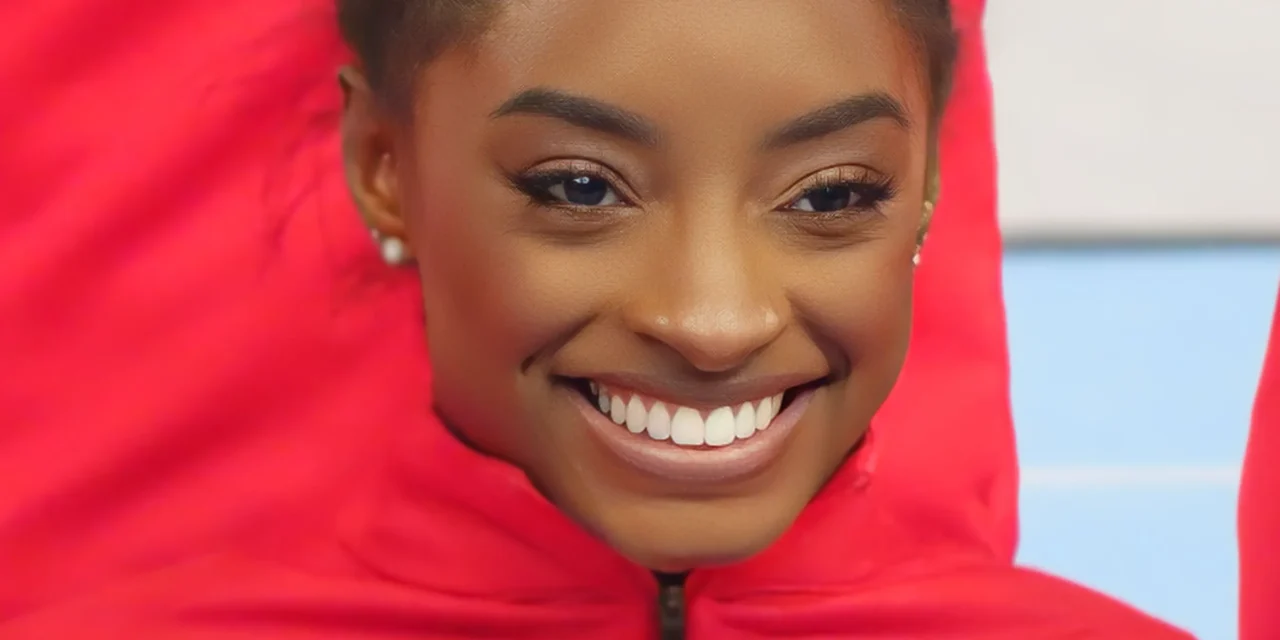
Pic Source: Ocoudis, https://commons.wikimedia.org/wiki/File:Simone_Biles_National_Team_2024.jpg