
The Press Conference
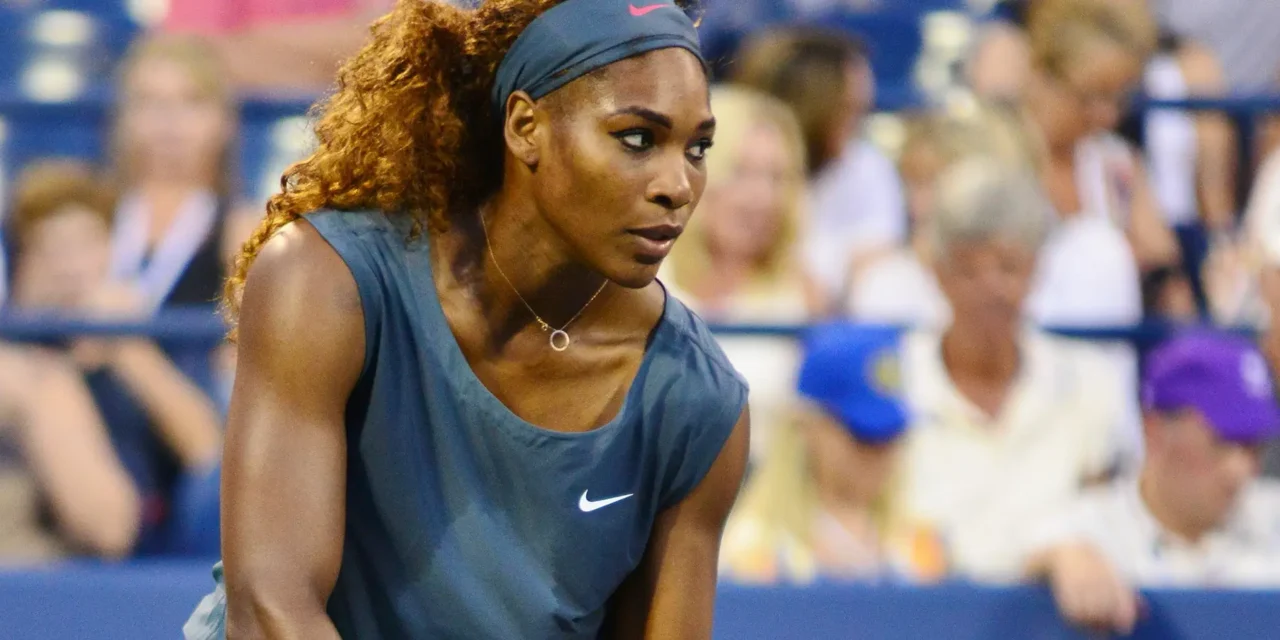
Serena Williams entered the press room at Arthur Ashe Stadium as the woman who had lost the 2018 US Open final, although defeat was no longer the story anyone had come to discuss. Naomi Osaka had played with extraordinary composure and beaten her 6–2, 6–4 to become the first Japanese player to win a Grand Slam singles title, yet the questions waiting for Williams were not primarily about Osaka’s tennis or the championship that had slipped away. They were about the warnings, the argument, the broken racket, the penalty that had cost her a game and the anger that had overtaken one of the most anticipated finals of the year.
Williams was still trying to understand what had happened. During the second set, chair umpire Carlos Ramos had issued her a code violation after her coach, Patrick Mouratoglou, made a gesture from the players’ box that Ramos interpreted as coaching. Mouratoglou would later acknowledge that he had been signalling, while also saying that Williams had not seen him. Williams insisted that she had received no instruction and reacted not as though she had been accused of a minor technical infringement, but as though her honesty had been called into question. She told Ramos that she did not cheat to win and would rather lose, then returned to the subject again and again because the warning remained on the record even after he appeared to accept her explanation.
When Williams later smashed her racket, the automatic consequence of a second code violation was a point penalty. As the match moved further from her control, so did the confrontation. She demanded an apology, called Ramos a thief for taking a point from her and told him that he had attacked her character. The insult brought a third violation and, with it, a full game penalty. Osaka was suddenly serving for the championship while thousands of people inside the stadium struggled to understand whether they were watching the decisive moments of a historic victory or an argument about authority, integrity and the different limits imposed on athletes when they express their anger.
By the time Williams sat before the journalists, Osaka had already been made to cry during what should have been the happiest ceremony of her career. Boos had filled the stadium when the result was announced, and Williams had placed an arm around the new champion before asking the crowd to stop. In the press room, she gave Osaka full credit for playing well and explained that she had wanted the young woman to enjoy her first Grand Slam victory. She also returned to the accusation that had wounded her most deeply. What she had said on court was simple: “I’ve never cheated in my life.”
It was an extraordinary sentence for one of the most accomplished athletes in the history of tennis to feel compelled to say. Williams had won twenty-three Grand Slam singles titles, spent hundreds of weeks as the world’s highest-ranked player and returned to elite competition after a pregnancy and birth that had nearly killed her. None of that protected her from having to defend not only her behaviour, but the kind of person she believed herself to be. The controversy would soon be reduced to a familiar set of opposing verdicts, with Williams portrayed either as the victim of a double standard or as a champion unwilling to accept the rules, but the moment cannot be understood through that match alone. To understand why a coaching warning became a question of character, and why Williams heard more in it than Ramos may have intended, the story has to begin long before either of them entered Arthur Ashe Stadium.
A Girl From Compton
Long before Serena Williams walked into the press room at Arthur Ashe Stadium, she learned to play tennis on public courts in Compton, California, where the surface was cracked, weeds pushed through the edges and there was none of the polished quiet traditionally associated with the sport. She practised beside her older sister Venus, repeatedly striking balls sent across the net by parents who had decided that their daughters belonged in a world that offered them little reason to believe it would welcome them. Serena had been born in Saginaw, Michigan, but Compton was where her game began, where the youngest of five sisters learned to move, compete and keep hitting long after most children would have wanted to go home.
Richard Williams had not grown up inside tennis and did not arrive with the credentials normally expected of a coach preparing two future champions. He taught himself the game through books and instructional videos, developed a detailed plan for his daughters and began building their careers before the wider tennis world knew their names. Oracene Price trained them too, bringing technical knowledge, discipline and a steadier presence to a project that would later be simplified into the story of one determined father. Together, their parents taught Serena and Venus the mechanics of the sport, but they were also preparing them for everything that would surround it, because talent alone would not protect two Black girls from Compton entering a game still closely associated with private clubs, wealth and whiteness.
Richard wanted his daughters to expect success before anyone else considered it plausible. He spoke publicly about their futures with a certainty that many observers interpreted as arrogance, while Serena, still the younger and initially less celebrated sister, watched Venus attract the first wave of attention. The family was not waiting for the tennis establishment to grant the girls permission to imagine themselves at its centre. The lesson beneath every practice session was more fundamental: they did not need to resemble the players who had come before them in order to deserve a place beside them.
The courts in Compton gave Serena something no academy could have manufactured. She developed power, concentration and an appetite for competition alongside a sister who was both her closest companion and the most immediate measure of how good she might become. The two girls ran drills, worked from the baseline and wore through shoes and racket strings while people around the courts began to understand that they were watching something unusual. Richard protected that development with the same stubborn confidence that had begun it, resisting pressure to push them too quickly through the junior system and insisting that childhood, education and long term preparation mattered more than collecting trophies as early as possible.
In 1991, the family moved to Florida so that Venus and Serena could receive additional training at Rick Macci’s academy, exchanging the public courts of Compton for one of the recognised pathways into professional tennis. Serena was nine years old, and the move brought her closer to the sport’s established structures without teaching her to depend upon their approval. By the time she entered professional tennis four years later, she had already absorbed the belief that would sustain her through victories, hostility and scrutiny: she belonged there before anyone in the stands, the press room or the umpire’s chair decided whether they agreed.
The Champion They Never Stopped Judging
Serena Williams won her first Grand Slam singles title at the 1999 US Open, defeating Martina Hingis in the final before she had even turned eighteen. The victory announced the arrival of a player with extraordinary speed, power and nerve, but it also began a pattern that would follow her for the rest of her career. The more Serena won, the more closely the world examined everything around the winning. Her serve could decide a match in seconds, her movement could turn defence into attack before an opponent had time to recover, and her willingness to keep swinging under pressure made her one of the most formidable competitors tennis had seen. Yet discussion of her achievements repeatedly drifted away from what her body could do and toward whether that body looked the way people believed a female tennis player should look.
Her strength was treated not simply as an athletic advantage, but as something that required explanation. Serena was described as too muscular, too powerful and too masculine, as though the body that had been built through years of training somehow placed her outside the category in which she competed. Comparisons with men followed her through interviews, commentary and public discussion, sometimes presented as jokes and sometimes as serious questions about where she belonged. In 2014, Shamil Tarpischev, then president of the Russian Tennis Federation, referred to Serena and Venus as the “Williams brothers,” a remark for which the Women’s Tennis Association fined him and suspended him from involvement in its tour for a year. Serena called the comment sexist and racist, but the insult was not an isolated aberration. It was an unusually public expression of an idea she had encountered in different forms throughout her career: that a Black woman could become so strong, so dominant and so visibly unlike the sport’s traditional image of femininity that people would begin questioning the woman rather than reconsidering the image.
Serena understood that the scrutiny was never only about muscle. Her hair, clothes, facial expressions and celebrations were repeatedly turned into evidence in a debate she had not chosen to enter. She could be criticised for appearing too masculine in one article and too sexual in another, which made the real demand almost impossible to satisfy. She was expected to be powerful enough to entertain, but graceful enough not to unsettle; emotional enough to appear human, but controlled enough never to make anyone uncomfortable; confident enough to be a champion, but not so confident that it looked like arrogance. The boundaries shifted whenever she approached them, allowing almost any version of Serena Williams to be described as the wrong one.
The judgement extended beyond appearance to the way she occupied the court. Anger that might have been treated as competitive intensity in another athlete was often presented as evidence of a deeper flaw in Serena’s character, while moments of frustration became part of a permanent public record against which her future behaviour could be measured. She was not always blameless, and some of her confrontations with officials deserved criticism, but the language used to describe her frequently carried a weight that was larger than the incident itself. She could lose her temper without merely being an athlete who had lost her temper. She became aggressive, threatening or out of control, descriptions that drew upon older stereotypes about Black women and made it difficult to separate legitimate criticism of her conduct from the assumptions already attached to her body and voice.
Even victory offered no reliable escape. At Indian Wells in 2001, a nineteen-year-old Serena played the final beneath sustained boos after Venus had withdrawn from their scheduled semifinal with an injury. Serena won the tournament, but she later described hearing racial abuse in the stands and watching her family receive the hostility around her. She did not return for fourteen years. When she finally came back in 2015, it was not because the experience had ceased to matter, but because she no longer wanted it to decide where she was allowed to play. By then she had collected enough titles to establish herself among the greatest players in history, yet greatness had not purchased the simple freedom to be judged only by the tennis she produced.
Serena eventually learned to answer the scrutiny without accepting its premise. In a letter to her mother after the birth of her daughter, she wrote about the powerful arms and body they shared and recalled being told that she belonged in men’s sport because she looked stronger than other women. Her response was neither an apology nor an attempt to prove that she could also fit a narrower ideal of femininity. She credited hard work, genetics and the body she was proud to inhabit. The same physique that commentators had tried to turn into a problem had carried her through tournaments, injuries, long rallies and championship matches across two decades. It had never prevented her from being a woman. It had only exposed how limited the accepted picture of one could be.
The Cost of Being Serena
In September 2017, Serena Williams gave birth to her first child, a daughter named Olympia. It should have been the beginning of an uncomplicated new chapter in her life. Instead, within hours of the delivery, she found herself fighting for her life. Williams had a history of blood clots and recognised the warning signs almost immediately. She felt short of breath and believed she was suffering another pulmonary embolism. She told the medical staff exactly what she thought was happening and asked for a CT scan with contrast as well as blood thinners. At first, her concerns were dismissed. Only after insisting that something was seriously wrong did doctors carry out the scan, confirming multiple blood clots in her lungs.
The diagnosis was only the beginning. The violent coughing caused by the embolism reopened her Caesarean wound, leading to emergency surgery. Further complications followed when doctors discovered a large haematoma in her abdomen. Williams remained largely confined to bed for weeks while her body slowly recovered from a sequence of medical emergencies that had begun only hours after becoming a mother. For someone whose career had been built on extraordinary physical control, it was a frightening reminder of how quickly strength could become vulnerability.
Later, Williams spoke openly about the experience, not because she wanted sympathy, but because she knew she had survived partly because she understood her own medical history and refused to stop advocating for herself. She also recognised that many women are not heard with the same persistence. Black women, in particular, face significantly higher rates of pregnancy-related complications and maternal mortality than white women in the United States, a reality Williams used her own story to help bring into public conversation. She was one of the most famous athletes in the world, surrounded by specialists in a modern hospital, and even she had struggled to convince medical professionals that something was terribly wrong.
Her recovery was measured not in trophies but in ordinary milestones. She could not immediately walk without pain. She depended on others to help care for her newborn daughter while her own body healed. The return to professional tennis that followed months later has often been presented as another chapter in Serena Williams’ remarkable sporting career, but that description overlooks what made it extraordinary. She was not returning from a torn ligament or a broken bone. She was returning from a pregnancy that had almost ended her life.
The physical challenge was immense, but so too was the emotional adjustment. Williams spoke candidly about the guilt she sometimes felt when travelling without Olympia and about the balance between motherhood and elite sport, a balance that male athletes have rarely been expected to explain in such detail. Every tournament became an opportunity for familiar questions that had little to do with forehands or serves. Could she still dominate? Would motherhood change her priorities? Was this finally the moment younger players would replace her? Success was no longer measured only by victories, but by whether she could somehow prove that motherhood had not diminished the athlete the world already knew.
Williams answered those questions in the only way she ever truly had, by competing. Less than a year after nearly dying in childbirth, she reached the Wimbledon final. Two months later, she reached another Grand Slam final at the US Open. The trophies did not immediately return, but something perhaps more remarkable did. She had already rewritten expectations once by changing what a champion could look like. Now she was quietly changing another assumption, showing that becoming a mother did not have to mean becoming a former athlete.
The Catsuit
By the time Serena Williams returned to Roland Garros in 2018, she had already survived more than most athletes ever face away from competition. The black Nike catsuit she wore during the tournament immediately became one of the most talked about outfits in tennis history. To some, it looked futuristic. To others, provocative. Within hours, it dominated headlines around the world. Fashion critics praised it, social media celebrated it and traditionalists questioned whether it belonged on a tennis court. Almost nobody began with the reason Serena had chosen to wear it.
For Williams, the suit was never intended as a fashion statement. After the blood clots that had nearly claimed her life following the birth of Olympia, compression garments had become part of her recovery. The catsuit helped improve circulation and reduce the risk of further clotting during long periods of intense physical exertion. It allowed her to compete with greater confidence in a body that was still recovering from one of the most difficult periods of her life. The garment was functional before it was symbolic.
That distinction quickly disappeared. Photographs of Williams in black from head to toe spread across newspapers and television broadcasts, often accompanied by discussions that had little to do with tennis. Once again, her body became the story. Instead of asking how remarkable it was that she had returned to Grand Slam competition only months after life threatening complications, many people debated whether she looked too powerful, too unconventional or too different from the image they associated with women’s tennis.
A few months later, French Tennis Federation president Bernard Giudicelli announced that outfits like Williams’ catsuit would no longer be permitted at Roland Garros. “One must respect the game and the place,” he told Tennis Magazine, adding that he believed the outfit “would no longer be accepted.” The comments triggered an international debate. Some defended the decision as a matter of dress code, while others saw it as another example of Serena Williams being judged by standards that seemed to shift whenever she challenged expectations.
Williams herself refused to turn the controversy into a personal battle. She responded calmly, saying that Grand Slam tournaments were free to set their own clothing regulations and that she would simply wear something else. There was no public campaign, no prolonged argument and no attempt to become the centre of another cultural debate. She had long understood that every response she gave would itself become part of the story.
The Women’s Tennis Association soon introduced a more flexible interpretation of its clothing rules, explicitly allowing leggings and compression wear for medical reasons. The argument faded, the headlines moved on and new tournaments replaced old controversies. Yet the episode remained strangely revealing. Serena Williams had worn a medically beneficial garment while returning from a near fatal childbirth, and the conversation had still become one about appearance. It was another reminder that even after two decades of redefining what greatness looked like, the world remained remarkably invested in telling her how a female champion should look instead.
The Press Conference, Revisited
By the time Serena Williams returned to the events of the 2018 US Open final, the argument looked different. It was no longer only about a code violation, a broken racket or a game penalty. Those moments still mattered, and the rules themselves were not in dispute. Chair umpire Carlos Ramos had applied the Grand Slam rulebook as it was written. A coaching gesture from Patrick Mouratoglou resulted in a warning. The smashed racket brought a point penalty. Calling the umpire a “thief” constituted verbal abuse and led automatically to a game penalty. Each sanction followed the established code of conduct.
The controversy arose because the match seemed to become about far more than the rules alone. Williams never denied breaking her racket or confronting the umpire. What she could not accept was the first violation, because it implied that she had received coaching during play. Mouratoglou later admitted that he had attempted to signal from the players’ box, while insisting that Serena had not seen him. For Williams, however, the issue had already moved beyond whether a hand signal had occurred. She believed the warning suggested that she had knowingly accepted illegal assistance to win a Grand Slam final. That accusation, more than the penalty itself, struck at something she valued above almost everything else: her integrity.
Looking back, it is easy to reduce the afternoon to two competing narratives. One portrays Williams as a player who refused to accept the consequences of her own behaviour. The other sees a champion who was judged differently from many male players displaying similar emotions on court. The reality is less convenient than either interpretation. Ramos enforced the rules as they existed, yet Williams’ reaction cannot be understood without considering the years that preceded that moment. She had spent an entire career defending not only her game, but also her body, her emotions, her clothes, her confidence and, repeatedly, her right to belong. When she heard that first warning, she did not hear a routine procedural decision. She heard another challenge to her character.
The debate that followed reached far beyond tennis. Former players, journalists and fans argued over consistency in officiating, unconscious bias and whether emotional behaviour was interpreted differently depending on who displayed it. Some pointed to male players whose outbursts had attracted fewer headlines or lighter public criticism. Others argued that comparisons between different incidents ignored the specific sequence of rule violations in New York. Years later, the discussion remains unresolved because it asks two separate questions at once. Did the umpire apply the rules correctly? And do athletes experience those rules within the same cultural context? Those questions are related, but they are not identical.
Perhaps that is why the image that endures is not Serena Williams arguing with Carlos Ramos, but Serena Williams standing beside Naomi Osaka during the trophy ceremony. As boos echoed through Arthur Ashe Stadium, Osaka lowered her visor and struggled to celebrate the greatest victory of her career. Williams put an arm around the twenty-year-old champion and asked the crowd to stop. “Let’s make this the best moment we can,” she said. It was a remarkable act from an athlete who had every reason to focus on her own disappointment. Even in the middle of one of the most controversial moments of her career, she understood that history should remember the woman who had won the match.
That afternoon would become one of the defining episodes of Serena Williams’ public life, replayed in documentaries, opinion pieces and debates about sport, race and gender. Yet the match itself explains surprisingly little. The real story began decades earlier on public courts in Compton, where a young girl learned that she belonged in places where many people believed she did not. Everything that followed, from the comments about her body to the scrutiny of her emotions, gave that lesson new relevance. By the time she looked into the cameras beneath Arthur Ashe Stadium and said, “I have never cheated in my life,” she was not only defending a point in a tennis match. She was defending the reputation she had spent a lifetime building.
The Historical Record
What happened?
- Serena Williams won 23 Grand Slam singles titles, the most in the Open Era.
- She held the world No. 1 ranking for 319 weeks, including 186 consecutive weeks.
- She won four Olympic gold medals, one in singles and three in doubles alongside her sister Venus Williams.
- In September 2017, Williams gave birth to her daughter Olympia after suffering life-threatening complications, including multiple pulmonary embolisms.
- Less than a year later, she reached the Wimbledon and US Open finals, becoming one of the few athletes to return to Grand Slam finals after such a serious medical recovery.
- At the 2018 US Open final, chair umpire Carlos Ramos issued three code violations against Williams, resulting in a warning, a point penalty and ultimately a game penalty under the Grand Slam rulebook.
- The match sparked a worldwide debate about officiating, gender, race and the different expectations placed on female athletes.
- Earlier that year, Williams’ black compression catsuit at Roland Garros became the centre of an international controversy despite being worn for medical reasons following childbirth.
- Throughout her career, Williams repeatedly challenged conventional ideas about femininity, athleticism and what a champion was expected to look and behave like.
Women in This Chapter
- Serena Williams: Twenty-three-time Grand Slam singles champion whose career transformed women’s tennis and challenged expectations of female athletes around the world.
- Venus Williams: Seven-time Grand Slam singles champion, Serena’s sister and lifelong doubles partner, who helped change the visibility and commercial value of women’s tennis.
- Naomi Osaka: Defeated Serena Williams in the 2018 US Open final to win her first Grand Slam title amid one of the most controversial matches in modern tennis.
- Coco Gauff: Grand Slam champion who has often described Serena and Venus Williams as major inspirations for her career.
- Martina Hingis: World No. 1 whom Serena defeated to win her first Grand Slam singles title at the 1999 US Open.
Why This Story Matters
Serena Williams’ story is about far more than winning tennis matches. It reveals how extraordinary success does not always free women from being judged by different standards. Throughout one of the greatest careers in sporting history, discussions about her body, emotions, clothing and motherhood often overshadowed the achievements that should have spoken for themselves.
She didn’t just change women’s tennis. She changed what the world believed a champion could look like.
Sources
- WTA – Serena Williams Player Profile
- US Open – Official Statement on the 2018 Women’s Final
- US Open – A Year After Becoming a Mom, Serena Williams Looks to Again Win the US Open
- US Open – Serena Announces Pregnancy
- WTA – Serena Williams and a Prophecy Fulfilled
- TIME – Serena Williams, Naomi Osaka and the 2018 US Open Final
- Reuters – Serena Williams and Her Return to Competitive Tennis
- Instagram – Serena Williams
- TIME – Serena Williams Shares Her Postpartum Struggles With Message of Support for All Mothers
- Vogue – Serena Williams: The Hardest Thing
Pic Source: Edwin Martinez from The Bronx