
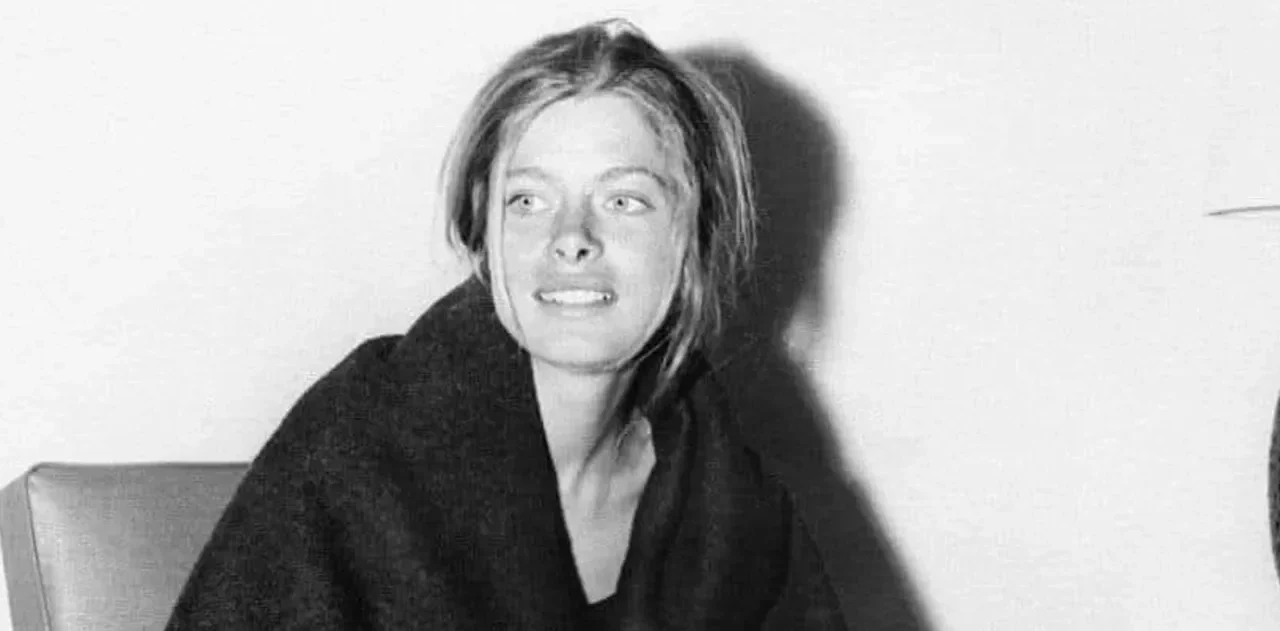
There Was Another Woman. Before bib number 261 became one of the most famous numbers in sport, before a race official charged into a group of runners and before the photograph of Kathrine Switzer travelled around the world, another woman had already run the Boston Marathon. She had crossed the same starting line, climbed the same hills and reached Boston faster than most of the men around her. She had done it without a race number, without permission and without any certainty that she would be allowed to finish.
Her name was Bobbi Gibb.
In 1966, Gibb had been running long enough to know what her body could do. She had trained for two years, sometimes covering distances far beyond the marathon itself. The 26.2 miles between Hopkinton and Boston did not frighten her. What stood between her and the race was not the distance, but the people who had already decided that a woman could not run it.
Months before the marathon, she wrote to the race organisers and requested an application. The reply came from race director Will Cloney. There would be no application. The Boston Marathon was a men’s event, he explained, and the rules governing amateur sport did not permit women to compete over such distances. But the letter went further. Women, Gibb was told, were not physiologically capable of running a marathon.
She read the words while carrying the knowledge that they were wrong. She had already run the distance. The men refusing her entry did not know what her body could endure. They had never watched her train. They had never followed her through mile after mile. Yet their assumption carried more authority than her experience.
The letter was intended to keep Bobbi Gibb away from the starting line.
Instead, it gave her a reason to be there.
She would travel across the country to Boston. She would go to Hopkinton on the morning of the race. And because the organisers would not allow her to stand among the runners, she would find another place to wait.
Behind the starting line, hidden among the bushes.
History would later remember the woman who entered the Boston Marathon under her initials and received an official number. It would remember the photographs, the confrontation and the man who tried to remove her from the course. But one year before all of that, Bobbi Gibb had already proved that a woman could run Boston. She simply had to disappear before anyone would let her begin.
Waiting in the Woods
On the morning of 19 April 1966, nearly five hundred runners gathered in Hopkinton, Massachusetts. Some stretched quietly. Others adjusted their shoes or chatted while waiting for the starter’s pistol. A marathon was still a small event in those days. There were no television cameras, no corporate sponsors and no crowds pressing against barriers. Almost everyone knew what the field was expected to look like.
One runner was missing.
Bobbi Gibb stood hidden behind a cluster of bushes near the start, wearing her brother’s Bermuda shorts and a blue hooded sweatshirt pulled low over her face. She had travelled more than 3,000 miles from California knowing she would not be allowed to stand on the starting line. If officials saw a woman among the runners before the race began, they would almost certainly remove her.
So she waited.
When the starting gun fired and the pack surged forward, Gibb remained still for a few moments. Only after the last runners had passed did she emerge from the bushes and quietly slip into the field. She kept her head down, saying nothing, trying to disappear among hundreds of moving bodies. It worked—for only a few minutes.
As the race settled into its rhythm, the men around her began to notice that one of the runners was not another man after all. Some stared. Others smiled. A few laughed in surprise. Then something unexpected happened. No one asked her to leave. Instead, runners began encouraging her. Spectators along the course applauded when they realised a woman was running Boston. At each town the whispers travelled a little faster than the runners themselves.
There’s a woman in the race.
By then, it was far too late to stop her.
The Race They Said She Couldn’t Run
The miles passed almost unnoticed. Gibb settled into her rhythm, climbing the rolling hills west of Boston and moving steadily through the field. The men around her treated her as another runner. Some offered encouragement. Others shared water or exchanged a few words as the miles slipped by. The race director had been certain that a woman could not run a marathon. The runners themselves were watching one do exactly that.
By the halfway point, word had spread far beyond the athletes. Spectators leaned closer as the pack approached, searching for the woman they had heard about. Applause followed her from town to town. Children shouted. People clapped as she passed. Instead of outrage, she found curiosity. Instead of ridicule, admiration. The further she ran, the more obvious the contradiction became. Nothing about the runner in front of them suggested weakness. She looked exactly as every marathon runner eventually does: focused, tired and determined to keep moving.
Hours after slipping unnoticed into the race, Bobbi Gibb crossed the finish line. She had completed the Boston Marathon in around three hours and twenty-one minutes, finishing ahead of well over two-thirds of the field. The organisers had insisted that women were physiologically incapable of running the distance. Bobbi Gibb had just disproved that claim with every step between Hopkinton and Boston.
Officially, nothing had happened. There was no race number beside her name. No place in the results. No winner’s medal. No recognition from the Boston Athletic Association. Yet everyone who had watched her knew they had witnessed history.
The First Woman to Run Boston
Bobbi Gibb returned the following year. And the year after that. In 1967 and 1968, she again completed the Boston Marathon, again finishing ahead of large parts of the men’s field. By then, she was no longer hiding in the bushes. The spectators knew her name. The runners welcomed her. The only people who refused to recognise what was happening were those responsible for keeping the official record.
In 1967, another woman also stood on the starting line. She had received an official race number by registering under the initials “K. V. Switzer.” When race official Jock Semple tried to remove her from the course, photographers captured the moment. The images travelled around the world. They became one of the defining photographs in the history of women’s sport.
Bobbi Gibb was running that day too. History remembered the photograph. It almost forgot the woman who had made it possible.
It would take nearly four decades before the Boston Athletic Association officially recognised Bobbi Gibb as the women’s champion of the 1966, 1967 and 1968 Boston Marathons. The races had not changed. Her performances had not changed. Only history had.
Today, Kathrine Switzer is rightly celebrated for changing the course of women’s running. But every starting line has a first runner. Before one woman challenged the rules from within, another had already proved that the rules were wrong. Bobbi Gibb never received a race number. She received something far more difficult to earn. She proved that the impossible had already happened.
Why This Story Matters
Bobbi Gibb didn’t just prove that women could run a marathon. She proved it before the world was ready to acknowledge it. Her achievement exposed a belief that had been presented as scientific fact: that women were physiologically incapable of running 26.2 miles. One marathon was enough to prove otherwise.
Yet proving something isn’t always enough to become part of history. Bobbi Gibb’s story reminds us that visibility and recognition are not the same. She changed the course of women’s running, but it was someone else’s photograph that became famous.
History remembered the moment. It almost forgot the woman who made it possible.
The Historical Record
What happened in Boston in 1966?
- Bobbi Gibb applied to run the 1966 Boston Marathon but was refused an official entry.
- Race director Will Cloney stated that women were not permitted to compete and argued that they were not physiologically capable of running a marathon.
- On 19 April 1966, Gibb travelled to Hopkinton, hid near the starting area and joined the race shortly after the starting gun.
- She completed the Boston Marathon in approximately 3 hours and 21 minutes, finishing ahead of well over two-thirds of the field.
- She became the first woman to run the entire Boston Marathon.
- Bobbi Gibb returned in 1967 and 1968, again completing the race and finishing ahead of many male competitors.
- In 1967, Kathrine Switzer became the first woman to run the Boston Marathon with an official race number, after registering as “K. V. Switzer.”
- In 1996, the Boston Athletic Association officially recognised Bobbi Gibb as the women’s champion of the 1966 Boston Marathon.
- She was later recognised as the women’s winner of the 1967 and 1968 Boston Marathons as well.
Women in This Chapter
- Bobbi Gibb: The first woman to run the Boston Marathon and the retroactively recognised women’s champion in 1966, 1967 and 1968.
- Kathrine Switzer: The first woman to compete in the Boston Marathon with an official race number, whose confrontation with race official Jock Semple became one of the defining images in the history of women’s sport.
Why This Story Matters
Bobbi Gibb didn’t just prove that women could run a marathon. She proved it before the world was ready to acknowledge it. Her performance exposed a belief that had long been presented as scientific fact: that women were physiologically incapable of running 26.2 miles. One marathon was enough to prove otherwise.
Yet proving something is not always enough to become part of history. Bobbi Gibb changed the course of women’s distance running, but it was another woman’s race one year later that became famous. Her story reminds us that recognition does not always belong to the person who came first.
History remembered the photograph. It almost forgot the woman who made it possible.