
Frozen Head State Park, Tennessee. 22 March 2024.
Somewhere in the forest, a woman is running out of time. She has been moving through the mountains of Tennessee for almost sixty hours, climbing steep slopes, descending through dense woodland and navigating terrain so difficult that even experienced ultrarunners regularly fail to find their way. She has barely slept. Her legs are exhausted, her breathing is laboured, and she has developed a painful limp. But somewhere ahead of her, at the end of a narrow road, stands a yellow metal gate. If she can reach it before the clock runs out, she will accomplish something no woman has ever done.
Her name is Jasmin Paris. She is forty years old, a British veterinarian, university lecturer and mother of two. For nearly three days, she has been competing in the Barkley Marathons, an ultramarathon so demanding that finishing it is considered an extraordinary achievement regardless of gender. Since the race began in its modern form in the 1980s, only a small number of runners have completed all five loops within the sixty-hour limit. Every one of them has been a man.
Now Paris is approaching the final stretch. For hours, she has been pushing herself harder than she thought possible, knowing that the time remaining is becoming dangerously small. The last kilometre is particularly cruel. She has survived the mountains, the darkness and the disorienting effects of extreme sleep deprivation, only to find herself facing the possibility of missing the finish by a matter of seconds.
Later, she will describe how desperately she wanted to stop. Her body was demanding oxygen, rest and relief from the relentless effort. But stopping was no longer an option. She could see people gathered along the road, shouting encouragement. A child on a bicycle urged her forward. Another spectator told her to pump her arms. She could barely distinguish individual faces. All her attention was fixed on the yellow gate ahead.
Paris accelerates up the final incline, forcing her exhausted legs into something resembling a sprint. She reaches the gate, folds over its metal barrier and collapses to the ground, struggling to catch her breath. Around her, people are cheering. She has completed the fifth and final loop in 59 hours, 58 minutes and 21 seconds.
Ninety-nine seconds remain.
For the first time in the history of the Barkley Marathons, a woman has finished the race. Paris lies on the ground, too exhausted to celebrate. Later, she will explain that her immediate concern was not the historical significance of what she had accomplished. She simply needed to breathe.
It is an extraordinary ending to a story that began far from Tennessee, with a young woman who had never particularly considered herself a runner.
The Woman Who Wasn’t a Runner
Jasmin Paris grew up in the Peak District in northern England, surrounded by the hills and open landscapes that would eventually become central to her life. Her parents regularly took the family hiking, and as she grew older, Jasmin began exploring more demanding mountain terrain with her brother. They travelled through European mountain ranges, sometimes spending a week or more walking and camping in the wilderness. Long before she discovered competitive running, she had developed a familiarity with steep climbs, unpredictable weather and the particular satisfaction of travelling through wild places under her own power.
But running was not a significant part of her childhood. She did not grow up competing in athletics or dreaming of Olympic medals. She studied veterinary medicine at the University of Liverpool, and after graduating in 2008, began working in a small-animal veterinary practice near her childhood home. Her relationship with the mountains remained important, but between professional responsibilities and everyday life, finding enough time for long hikes was becoming increasingly difficult.
Then, at the age of twenty-five, a colleague suggested that she enter a local fell race. Fell running is a particularly British form of off-road running, often involving steep hills, rough ground and routes across open moorland. Competitors may encounter mud, loose stones, slippery grass and descents that require considerable confidence and balance. Paris had never taken part in such an event. She arrived wearing ordinary road-running shoes, which proved spectacularly unsuitable for the conditions.
She spent much of the downhill running slipping, falling and sliding through the mud. She was inexperienced, poorly equipped and nowhere near the front of the field. Yet she loved it. The combination of physical effort, mountain scenery and the camaraderie among competitors felt immediately familiar. She had discovered a way to experience the landscapes she loved while covering far greater distances than she could on foot.
Paris joined the Glossopdale Harriers running club and began entering more races. Within six months, she had completed her first ultramarathon, the 33-mile Haworth Hobble. Her longest previous run had been around seventeen miles, accompanied by her dog. She approached the event with two more experienced runners, stayed with them for much of the course and finished in under six hours. What remained particularly vivid in her memory were the atmosphere and the unusual refreshments at the checkpoints, where runners were offered everything from doughnuts to hot dogs and whisky.
There was no carefully designed pathway from junior athletics to professional sport, no childhood coach who had identified a future champion. Paris had discovered competitive running almost accidentally, in her mid-twenties, and found that she was particularly well suited to the long, technically demanding events that attracted her most.
Over the following years, Paris became one of Britain’s leading fell runners, winning national titles and setting mountain-running records while pursuing her academic career at the University of Edinburgh. Her experience in the mountains had taught her to navigate difficult terrain, endure harsh conditions and remain focused through exhaustion, skills that would prove invaluable in the years ahead.
In January 2019, at thirty-five, she entered the Spine Race, a 268-mile winter ultramarathon along Britain’s unforgiving Pennine Way. She was also the mother of a fourteen-month-old daughter, whom she was still breastfeeding. Over the next three and a half days, she would make racing history. And when the world reported her achievement, her motherhood would attract almost as much attention as her extraordinary performance.
The Mother Who Won Everything
Producing breast milk requires energy. A breastfeeding woman’s body must supply not only her own nutritional needs but also the energy and nutrients needed to produce milk for her child. Depending on how much milk she produces, breastfeeding can increase daily energy requirements by several hundred calories. It also places additional demands on hydration and nutrition, while the physical recovery from pregnancy and childbirth can present challenges of its own. None of this makes endurance sport incompatible with breastfeeding. But it adds another dimension to an already demanding undertaking, particularly when that undertaking involves running more than 400 kilometres through the British winter.
Jasmin Paris had intended to stop breastfeeding before the 2019 Spine Race. Her daughter Rowan was fourteen months old, and Paris had prepared a supply of frozen breast milk for her while she was away. But shortly before the event, Rowan suffered two consecutive viral infections and temporarily refused everything except breast milk. Weaning was postponed. Paris packed a breast pump alongside her running equipment, knowing she would need to express milk at checkpoints to relieve discomfort and reduce the risk of mastitis, a painful inflammation of breast tissue that can sometimes lead to infection.
For the race itself, she had prepared meticulously. Training had to fit around her work at the University of Edinburgh and her responsibilities as a mother, which often meant getting up at four or five in the morning to run before the rest of the household woke. When her coach suggested carrying a weighted backpack during training, Paris sometimes took her daughter on long hikes instead. She had returned to racing after giving birth, but the Spine Race would be unlike anything she had attempted before.
The route followed the Pennine Way for 268 miles (431 kilometres), from Edale in Derbyshire to Kirk Yetholm near the Scottish border. Competitors faced exposed moorland, steep climbs, freezing temperatures and long stretches of darkness. Unlike a conventional ultramarathon, the Spine Race continued through several days and nights, forcing runners to decide when to eat, rest and sleep without losing too much time. The challenge was not simply to keep moving, but to remain capable of making sensible decisions as exhaustion accumulated.
At the first checkpoint, Paris stopped to express milk. She later recalled that the process took longer than expected, and while she was occupied with the breast pump, her competitors continued racing. She had to hurry afterwards to recover the lost time. As the race progressed, however, her milk production decreased substantially, making the later stops quicker. She would later describe breastfeeding during the event as less troublesome than she had feared. What made the achievement remarkable was not that breastfeeding prevented her from competing, but that she managed the additional demands while outperforming an entire field of elite endurance runners.
For much of the race, Paris was competing near the front with Spanish ultrarunner Eugeni Roselló Solé. Their progress attracted increasing attention as it became clear that both were moving considerably faster than the existing course record. But Roselló was eventually forced to withdraw after developing hypothermia, leaving Paris to continue towards the finish alone. The physical demands were enormous. Across more than three days, she spent only around seven hours stopped, including time for eating, sleeping, changing equipment and expressing milk.
Sleep deprivation was beginning to distort her perception. In the Cheviot Hills, rocks appeared to transform into animals, and at times she forgot what she was doing. Yet she also remembered the beauty of the final evening, with thousands of stars above the mountains.
On 16 January 2019, Paris reached Kirk Yetholm after 83 hours, 12 minutes and 23 seconds. She had won the Spine Race outright, breaking the overall course record by almost twelve hours. The next competitor arrived more than fifteen hours later. Waiting at the finish was her daughter Rowan.
The international media were fascinated by the breastfeeding mother who had beaten every man in the race. Paris welcomed the attention, hoping her story would encourage other women to pursue ambitious goals alongside motherhood. For her, expressing milk had simply been a practical necessity during an extraordinary athletic performance.
She had not stopped being a mother to become a champion. She had been both.
Five years later, another race would make her name known around the world. This time, simply reaching the finish would be enough to make history.
The Race That Eats Its Young
The Barkley Marathons take place in Frozen Head State Park, Tennessee, but calling them a marathon is misleading. The full race consists of five loops through steep, densely wooded mountains, covering roughly 100 miles and an enormous amount of climbing. Runners have sixty hours to finish. There are no conventional aid stations, no course markings and no GPS navigation. Instead, competitors use a map and compass to locate books hidden along the route, tearing out the page corresponding to their race number as proof that they have followed the correct course.
Even the start is unusual. Race director Gary Cantrell, better known as Lazarus Lake, blows a conch shell to announce that the race will begin in one hour. When he lights a cigarette, the runners set off from a yellow gate. The same gate marks the end of every loop, and after completing one, competitors must return to the forest, often travelling the course in the opposite direction. Darkness, unpredictable weather and sleep deprivation make navigation progressively harder. The event’s unofficial motto is “The Race That Eats Its Young.”
After Paris won the Spine Race in 2019, Cantrell expressed interest in seeing her attempt Barkley. Initially, she found the idea of running repeated loops through a forest rather strange. But the challenge gradually took hold. She was drawn to the uncertainty of attempting something that might genuinely be beyond her abilities.
Her first attempt came in 2022. Heavy rain, fog and darkness made navigation extremely difficult, and Paris repeatedly lost time searching for the correct route. She completed three loops in 39 hours, 49 minutes and 56 seconds, narrowly earning what Barkley organisers call a Fun Run. The name was almost comically inappropriate for what she had endured. She had finished three loops within forty hours, but too slowly to qualify for a fourth.
She returned in 2023, better acquainted with the terrain and the peculiar demands of the race. This time, she completed three loops in under thirty-six hours and started a fourth, something only one woman had previously done. But exhaustion and the relentless terrain caught up with her. She ran out of time before completing the loop.
Afterwards, Cantrell asked whether she still believed she could finish all five. Paris answered yes. She knew how much work remained, but two unsuccessful attempts had given her something no amount of training in Scotland could provide: experience of the Barkley course itself.
By 2024, she had spent two years learning its hills, its navigation traps and the particular exhaustion of returning to the same punishing terrain again and again. She was preparing for her third attempt, knowing that even perfect preparation offered no guarantee of success.
She had come to Tennessee twice and left without finishing. This time, she intended to complete all five loops.
The Fifth Loop
On 20 March 2024, Jasmin Paris stood at the yellow gate in Frozen Head State Park for the third time. She had trained consistently, strengthened her legs and spent hours studying the terrain she had struggled to navigate in previous years. This time, she felt ready. She was not interested in completing another three-loop Fun Run or setting a women’s record. She had come to finish all five loops.
For the first two days, her preparation paid off. She moved efficiently through the forest, sometimes alongside experienced Barkley competitors, sometimes alone. By the end of the third loop, she had established a new women’s Fun Run record. But the fourth loop brought her close to breaking point. After nearly two days of climbing and descending through the mountains, she struggled to eat, and severe stomach pain made every movement uncomfortable. At one point, alone in the dark forest, she lay down on the ground and curled into a ball, hoping the nausea would pass. She later admitted how fortunate she was not to have fallen asleep there.
Sleep deprivation was also beginning to interfere with her perception. Paris had experienced vivid hallucinations during previous attempts, including frightening figures and animals that appeared among the trees. In 2024, she reported fewer such episodes, although she struggled to remain awake during the fourth loop. She knew that exhaustion could make the forest appear unfamiliar even when she was following a route she had studied carefully. The challenge was to keep navigating accurately while her body demanded rest.
After 46 hours, 29 minutes and 12 seconds, Paris returned to the yellow gate. She had become the first woman ever to complete four Barkley loops. But there was little time to celebrate. She felt sick, could barely eat and had approximately thirteen hours remaining to finish a fifth loop that had taken her more than fourteen hours in the opposite direction.
Before leaving, she forced herself to eat some rice pudding. Fellow competitor Jared Campbell, already a multiple Barkley finisher, was preparing to depart, and Paris learned that leaving promptly would allow her to take the clockwise direction, generally considered faster. She gathered her equipment and followed him back towards the forest. For the first time, every hill she climbed would be one she never had to climb again.
But the final loop was far from straightforward. Paris made navigation errors, one of which cost her an estimated fifteen to twenty minutes. With roughly six hours remaining, she realised that finishing was possible, but the margin was becoming dangerously small. She had to maintain a pace approaching what she had managed on the opening loop, when her legs were fresh and she had not yet spent two nights in the mountains.
As daylight faded, the race became an increasingly desperate calculation of distance and time. She could not afford to stop, yet every climb demanded more effort than the last. When she finally reached the last stretch of trail, she looked at her watch and saw that only about eight minutes remained. For the first time, she seriously considered the possibility that she might complete almost sixty hours of racing and still fail.
She emerged onto the road leading towards the yellow gate. Spectators began shouting encouragement. A child on a bicycle urged her forward, while a man running beside her told her to use her arms and stop looking at her watch. Paris was struggling to breathe, and her legs were barely responding. But she accelerated. Later, she would explain that she had reached a level of physical effort she had never previously imagined possible.
Then came the gate. She touched it and collapsed, having completed the Barkley Marathons in 59 hours, 58 minutes and 21 seconds. Just ninety-nine seconds remained before the cutoff.
It was the first official finish by a woman in the history of the race. Yet Paris had not spent those sixty hours thinking about becoming the first woman to complete four loops, or the first to start a fifth. As she explained afterwards, those milestones had meant little to her during the race. She had wanted one thing: to finish.
And after three attempts, she finally had.
Beyond the Yellow Gate
Jasmin Paris’s finish made headlines around the world. The photographs showed a woman collapsed beside a yellow gate, her legs scratched and bloodied, barely able to lift her head. She had become the first woman to complete the Barkley Marathons, joining an extraordinarily small group of athletes who had ever finished the race. But for Paris, the achievement was not the end of her running career. She returned to her family, her academic work and the mountains she had loved long before anyone knew her name.
In 2026, at forty-two, she was still competing internationally. At the Swiss Alps 100, a demanding 160-kilometre mountain ultramarathon, she finished second among women and thirteenth overall in 29 hours, 23 minutes and 48 seconds. Her Barkley achievement had not been a final triumph before retirement. She remained an exceptional endurance athlete.
Meanwhile, the Barkley Marathons continued to defeat even the world’s most experienced ultrarunners. In 2025, nobody finished. In February 2026, forty runners started, including ten women. Again, nobody completed all five loops. Only one competitor managed the three-loop Fun Run. Jasmin Paris remained the only woman ever to finish the Barkley Marathons.
Her story is sometimes presented as proof that women can compete with men in extreme endurance events. But that interpretation barely begins to describe what she accomplished. Paris won the Spine Race outright, broke its overall course record while breastfeeding her daughter, and later completed a race that had defeated generations of outstanding athletes. These were not symbolic victories. They were measurable performances against the same courses, conditions and time limits faced by everyone else.
For decades, every official Barkley finisher had been a man. Then, on 22 March 2024, Jasmin Paris reached the yellow gate with ninety-nine seconds remaining. The race had not become easier, and the sixty-hour limit had not changed.
Only the list of people who had proved it could be done was different.
The Historical Record
What happened?
- 1983: Jasmin Paris is born in the United Kingdom and grows up in the Peak District, where she develops a love of hiking and mountain landscapes.
- 2008: After graduating in veterinary medicine from the University of Liverpool, Paris begins her professional career. Around this period, she discovers competitive fell running.
- 2015: Paris wins the women’s competition at the Dragon’s Back Race, finishing second overall.
- 2016: She sets women’s records on Britain’s three major mountain-running challenges: the Bob Graham Round, Paddy Buckley Round and Ramsay Round.
- 16 January 2019: Paris becomes the first woman to win the 268-mile Spine Race outright, completing the course in 83:12:23 and breaking the previous overall record by almost twelve hours. She expresses breast milk at checkpoints for her fourteen-month-old daughter.
- 2022: On her first attempt at the Barkley Marathons, she completes three loops within the forty-hour Fun Run limit.
- 2023: She becomes the second woman to start a fourth Barkley loop but does not complete it within the time limit.
- 22 March 2024: Paris becomes the first woman in history to finish the Barkley Marathons, completing all five loops in 59:58:21, with just 99 seconds remaining.
- 2025–2026: The Barkley Marathons produce no official finishers in either year. Paris remains the only woman to have completed the race.
- August 2026: She finishes second among women and thirteenth overall at the Swiss Alps 100, recording a time of 29:23:48.
People in This Chapter
- Jasmin Paris: British ultrarunner, veterinarian and academic. Winner of the 2019 Spine Race outright and the first woman to complete the Barkley Marathons in 2024.
- Gary Cantrell (Lazarus Lake): American endurance-event organiser and creator of the Barkley Marathons and Backyard Ultra. Known for designing races that push competitors to their physical and psychological limits.
- Jared Campbell: American ultrarunner and multiple Barkley Marathons finisher. An experienced competitor who played a role in Paris’s historic 2024 race.
- Sue Johnston: American ultrarunner who became the first woman to begin a fourth loop at the Barkley Marathons in 2001, more than two decades before Paris completed all five.
- Eugeni Roselló Solé: Spanish ultrarunner who competed against Paris for the lead in the 2019 Spine Race before withdrawing due to hypothermia.
- Rowan: Jasmin Paris’s daughter, who was fourteen months old when her mother won the 2019 Spine Race. Paris expressed breast milk during the race and reunited with Rowan at the finish.
Why This Story Matters
Jasmin Paris did not need a separate course, an adjusted time limit or a different definition of success. In 2019, she broke the overall Spine Race record. Five years later, she completed a race that had defeated every woman before her and most of the men who attempted it.
Her story challenges two persistent assumptions: that motherhood necessarily limits athletic ambition, and that the most demanding endurance achievements belong exclusively to men.
The standards did not change. Our understanding of who could meet them did.
Sources and Further Reading
- iRunFar: Self-Confidence – An Interview with Jasmin Paris About Her 2024 Barkley Marathons Finish (2024). An extensive first-person interview covering her preparation, earlier attempts, navigation mistakes and final sprint.
- iRunFar: 2024 Barkley Marathons Results (2024). Officially reported finishing times, race milestones and historical context.
- British Mountaineering Council: Jasmin Paris Breaks All the Records of the Montane Spine Race (2019). Interview covering her record-breaking performance, breastfeeding and training alongside motherhood.
- ABC News: I Breast Pumped While Crushing a Record and Becoming the First Woman to Win a 268-Mile Race (2019). Paris’s own account of the Spine Race and the practical realities of breastfeeding during competition.
- The Guardian: Ultrarunner Jasmin Paris on Her Gruelling 83-Hour Win (2019). Interview documenting the course record, sleep deprivation and hallucinations.
- Swiss Alps 100: Official 2026 Results (2026). Official race classification confirming Paris’s second-place women’s finish and thirteenth place overall.
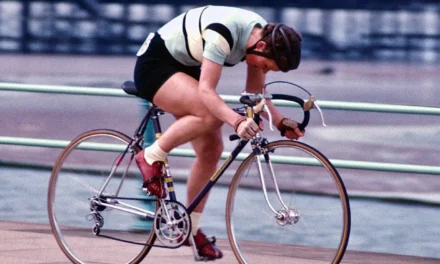
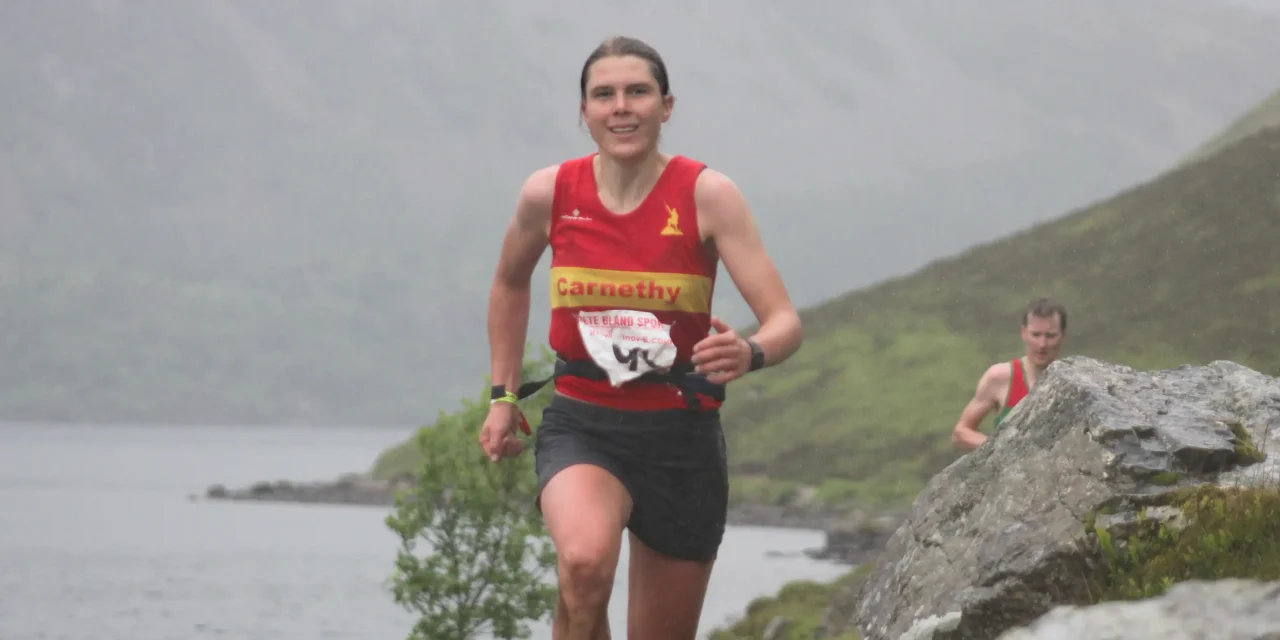
Pic Source: Paul dobson https://commons.wikimedia.org/wiki/File:2014_Ennerdale_Horseshoe_Jasmin_Paris.jpg