
A Liquorice Allsort
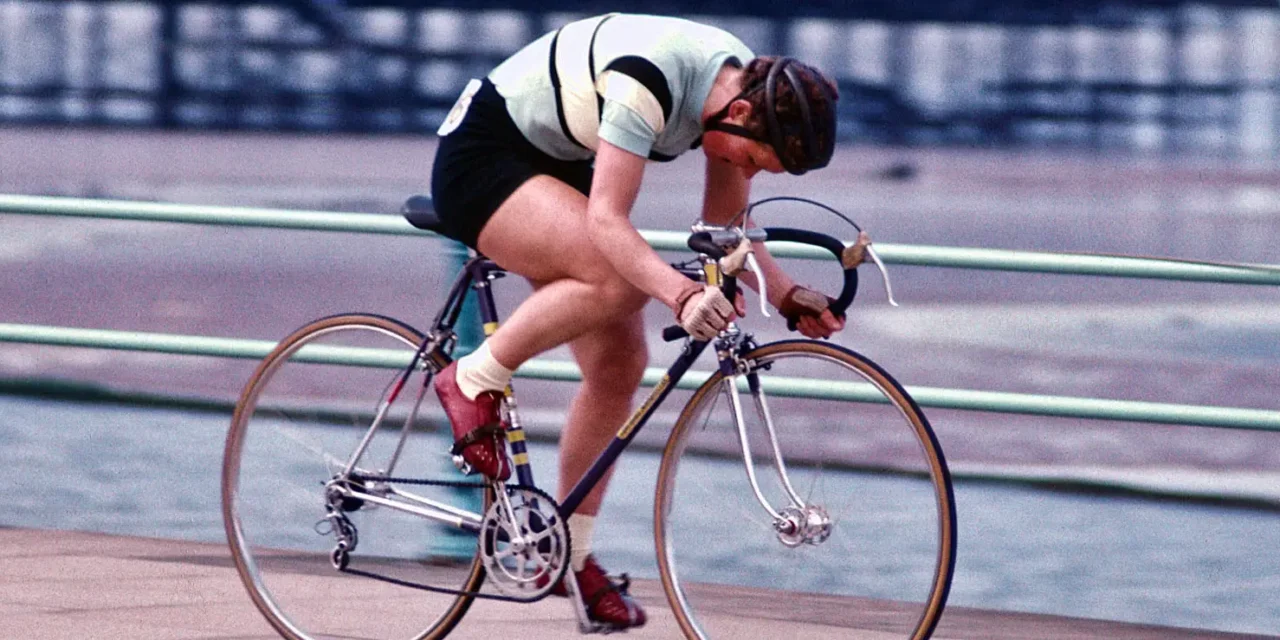
Somewhere on the roads of Yorkshire, after almost twelve hours in the saddle, Beryl Burton caught up with Mike McNamara. McNamara was not struggling. Quite the opposite. He was producing the ride of his life.
It was 17 September 1967, and Britain’s leading long-distance cyclists were competing in the Otley Cycling Club twelve-hour time trial. The aim was brutally simple: ride as far as possible before the clock ran out. McNamara was on course to break the British men’s record. By the end of the day, he would cover 276.52 miles — more than 445 kilometres — and surpass a mark that had stood for nine years.
But first, Beryl Burton rode up beside him. She reached into her pocket, took out a liquorice allsort and offered it to him. Then she carried on.
Burton later remembered feeling sorry for McNamara. His performance deserved to be celebrated. Instead, she realised, it was about to be overshadowed by a woman. When the twelve hours were over, Beryl Burton had ridden 277.25 miles. She had travelled almost three-quarters of a mile farther than the man who had just broken the men’s record.
This was not simply the greatest distance achieved by a woman that day. It was the greatest distance achieved by anyone.
For the next two years, no British man could match it. It would take fifty years, radically improved bicycles, aerodynamic clothing and modern training methods before another woman finally rode farther in a twelve-hour competition.
Yet Beryl Burton was not a professional cyclist. She had no sports scientists, no professional support team and none of the commercial opportunities enjoyed by today’s elite athletes. She combined elite cycling with work and family life, including periods working in Yorkshire’s rhubarb industry. By 1967, she was already one of the most successful cyclists Britain had ever produced.
Most people had simply never heard of her.
The Girl Who Was Not Supposed to Be an Athlete
Beryl Charnock had not grown up expecting to become a cyclist. For a time, it was uncertain whether she would ever be strong enough to become an athlete at all. She was born on 12 May 1937 in Halton, on the outskirts of Leeds. At school, Beryl was bright, determined and intensely competitive. When she prepared for the examination that could have secured her a place at grammar school, she expected to pass. Instead, she froze.
The failure affected her deeply. Soon afterwards, at the age of eleven, she became seriously ill. She was diagnosed with rheumatic fever and Sydenham’s chorea, a neurological complication that could cause uncontrolled movements, weakness and difficulty speaking. Beryl spent nine months in hospital and much of the following year recovering.
At one point, she was unable to speak properly and partially paralysed down one side of her body. Her recovery took more than a year, and for a time it was uncertain whether she would ever regain her full strength. It was an unlikely beginning for one of the greatest endurance athletes Britain would ever produce.
But cycling did not enter her life through a carefully designed rehabilitation programme or the discovery of some obvious childhood talent. It arrived through Charlie Burton.
Beryl met Charlie while they were both working at a clothing factory in Leeds. He was a member of Morley Cycling Club and spent his weekends riding with the other young men. They married in 1955, when Beryl was eighteen.
She began joining Charlie and his clubmates on their Sunday rides, although nobody immediately mistook her for a future world champion. During her first year, she often struggled at the back of the group. The others sometimes had to wait for her or help her keep pace. In the second year, she began staying with them. By the third, she was riding at the front. Then she started leaving them behind.
Charlie Burton later recalled her remarkable progress with a smile: “First of all, she was handy but wasn’t that competent. By the second year, she was one of the lads. By the third year, she was going out in front and leading them all.”
Charlie encouraged her to try time trialling, one of the most important forms of British cycle racing at the time. Riders started individually and raced against the clock, often over long distances on open roads. There was no peloton to hide in and no teammate whose wheel she could follow.
Just a bicycle, a road and a clock. It suited Beryl perfectly.
In 1957, only a few years after she had first struggled to keep up on club rides, she won silver in the British national 100-mile time trial championship. She was twenty years old. The woman once warned against strenuous exercise had found a sport built around the ability to endure it.
A Champion Without an Audience
Success came quickly. What did not come were the rewards that usually followed it. The contrast with men’s cycling could hardly have been greater. By the 1960s, elite male riders competed for professional trade teams, raced iconic events such as the Tour de France, Giro d’Italia and Vuelta a España, and the sport’s biggest stars could earn a living from cycling.
Women’s cycling offered almost none of these opportunities. The UCI introduced a Women’s Road World Championship only in 1958, more than thirty years after the men’s championship. There was no women’s Tour de France, few international races and almost no professional infrastructure.
The difference becomes clearer when Burton’s career is compared with that of her contemporary Tom Simpson. Both were born in 1937, both represented Britain at the highest level, and both became world champions. Yet they competed in two entirely different sporting worlds.
Simpson moved to continental Europe, joined professional trade teams and earned his living racing in events such as the Tour de France, the Giro d’Italia and cycling’s major one-day classics. Burton returned home after races to go to work, care for her family and fit training around everyday life. While men’s cycling had already developed into a professional sport with established teams, sponsors and an international racing calendar, women’s cycling remained largely amateur. The UCI had introduced a Women’s Road World Championship only in 1958, more than thirty years after the men’s championship, and there was still no equivalent to the Tour de France, few international races and little financial support. But none of this slowed Burton down.
In 1959, she became British National Road Race Champion for the first time. It marked the beginning of one of the most extraordinary careers in cycling history. Over the next twenty-five years, she won more than ninety British national titles across road racing, time trials and pursuit events, repeatedly broke national records and became the dominant force in British women’s cycling.
Her success was not confined to Britain. Burton won her first UCI Road World Championship in 1960 and her second in 1967, adding multiple World Championship medals along the way. By the late 1960s, she had established herself as one of the finest endurance cyclists in the world.
In 1960, she won the UCI Road World Championship in Karl-Marx-Stadt, East Germany. Four years later, she won the rainbow jersey again in Sallanches, France. Between those victories, she claimed silver medals in 1961 and 1963 and a bronze medal in 1965, remaining among the world’s best riders for more than a decade. Her dominance became so familiar that it almost stopped being news. Every season seemed to end the same way. Beryl Burton had won again.
The Ride That Should Have Made History
By September 1967, Beryl Burton had spent almost a decade proving she was the finest female cyclist in Britain. But on one Saturday in Yorkshire, she achieved something that went far beyond women’s cycling.
The Otley Cycling Club’s twelve-hour time trial was one of the country’s most prestigious endurance events. Riders had exactly twelve hours to cover as much distance as possible. Success depended not on tactics or teamwork, but on relentless pacing, physical resilience and the ability to endure discomfort hour after hour.
Among the competitors was Mike McNamara, one of Britain’s strongest male time trialists. He was riding exceptionally well and, by the end of the day, would break the long-standing British men’s record.
Except there was one rider going even faster.
Late in the race, Burton caught McNamara from behind. As she drew alongside him, she reached into her pocket, handed him a liquorice allsort and wished him well before continuing on her way. The gesture became cycling folklore, but it also captured something about Burton herself. She was fiercely competitive without ever losing her generosity.
When the clock finally stopped, McNamara had covered 276.52 miles (445.02 km), setting a new British men’s record. Burton had ridden 277.25 miles (446.11 km).
She had not merely won the women’s competition. She had ridden farther than every man.
Even more remarkably, Burton’s distance remained beyond the reach of British male cyclists for the next two years. Her record stood until 1969, when it was finally surpassed by a man. No woman would better Burton’s twelve-hour distance for another fifty years. It was one of the greatest endurance performances ever produced by a British cyclist.
She had won two UCI Road World Championships, more than ninety British national titles, set countless national records and produced one of the greatest endurance performances in British sporting history.
For two years, no British man rode farther. For fifty years, no woman did.
The Historical Record
What made Beryl Burton extraordinary?
- Beryl Burton (1937–1996) was one of the most successful cyclists in British history.
- She won the UCI Road World Championship twice, in 1960 and 1967, and claimed multiple World Championship silver and bronze medals.
- Between 1959 and 1983, she won more than 90 British national titles across road racing, pursuit and time trials.
- In 1967, she rode 277.25 miles (446.11 km) in a twelve-hour time trial, surpassing the newly established British men’s record.
- Her distance remained beyond the reach of British male cyclists for the next two years.
- No woman exceeded Burton’s twelve-hour distance until Alice Lethbridge broke the record in 2017.
- Despite her achievements, Burton spent most of her career balancing elite sport with work and family life, competing as an amateur during an era of minimal support for women’s cycling.
Women in This Chapter
- Beryl Burton: Britain’s most decorated female cyclist and one of the greatest endurance athletes the country has ever produced.
- Denise Burton: Beryl’s daughter, who followed in her mother’s footsteps and became a British international cyclist, often competing alongside her.
Why This Story Matters
Beryl Burton’s career challenges the boundaries through which sporting greatness is often understood. She did not merely dominate women’s cycling. In 1967, she rode farther in twelve hours than any British man, setting a standard that remained beyond the reach of male riders for two years and female riders for fifty.
Her story reminds us that records are not shaped by expectations. They exist to expose their limits.
Sources
- Burton, Beryl (1986). Personal Best. Manchester: Sportspages. (Autobiography)
- Fotheringham, William (2019). The Greatest: The Times and Life of Beryl Burton. London: Faber & Faber.
- CyclingNews – The Greatest: The Times and Life of Beryl Burton (book extract by William Fotheringham)
- Cycling UK – Beryl Burton (100 Women in Cycling)
- British Cycling – British Cycling supports play inspired by Beryl Burton
- British Cycling – Obituary: Charlie Burton
- British Cycling – Hall of Fame (Beryl Burton)
- Union Cycliste Internationale (UCI) – World Championship Records and Historical Archives
Pic: Brian Townsley