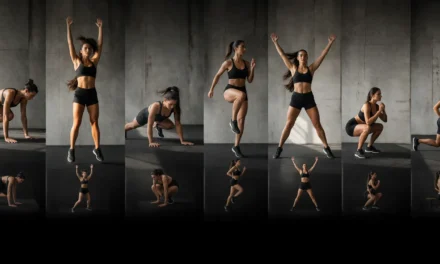



Do you burn more calories on your period? Slightly, perhaps, but the timing matters. Research suggests that resting metabolism can increase by roughly 30 to 120 calories per day during the luteal phase, which happens before your period starts. Once menstruation begins, that increase does not necessarily continue.
So if you have ever spent three days feeling ravenous, tired and absolutely convinced that your body must be burning an additional 500 calories just to keep you alive, there is some science behind the first part. Your energy metabolism can change across your menstrual cycle. The 500 calorie bonus, unfortunately, is much harder to defend.
How Your Menstrual Cycle Affects Calorie Burn
To understand why the answer is more complicated than a simple yes, it helps to stop thinking about your period as the entire menstrual cycle. Menstruation is only one part of it.
A typical menstrual cycle can be divided into four phases: menstruation, the follicular phase, ovulation and the luteal phase. Hormone concentrations change substantially across those phases, particularly estrogen and progesterone. These hormones influence far more than reproduction. They can affect body temperature, appetite, fluid balance, perceived exertion and energy metabolism.
After ovulation, progesterone rises during the luteal phase. Body temperature also increases slightly. Researchers have repeatedly investigated whether these physiological changes increase resting metabolic rate, meaning the amount of energy your body uses simply to keep you alive.
The answer appears to be yes, but only slightly.
A 2026 systematic review of resting metabolic rate across the menstrual cycle found that five of seven included studies reported a trend toward higher metabolism during the luteal phase, with estimated increases of approximately 30 to 120 calories per day. The authors described the overall shift as small, roughly 3 to 5 percent, and noted that it can overlap with normal day to day variation.
A 2024 study using indirect calorimetry found an even smaller difference. Resting energy expenditure was about 40 calories higher per day in the luteal phase than in the early follicular phase. After researchers excluded statistical outliers, the difference was approximately 44 calories per day.
And this distinction is important: the luteal phase is the period between ovulation and your next menstruation. It is not your period.
How Many Extra Calories Are We Talking About?
If you want one practical number, think somewhere in the neighborhood of 30 to 120 extra calories per day during the luteal phase based on the range reported in recent research, with considerable individual variation.
That is an apple with some peanut butter. A small yogurt. Half a protein bar. It is not a pizza, a family sized bag of chips and dessert courtesy of your ovaries.
This is where the popular claim that women automatically burn 300, 400 or even 500 extra calories during their periods becomes problematic. Current evidence does not support such a universal increase. In fact, a systematic review and meta-analysis of 30 studies found only a small overall increase in resting metabolic rate during the luteal phase, and the effect became smaller and statistically uncertain when the researchers looked specifically at more recent studies.
That does not mean your experience is imaginary if you feel hungrier. Hunger and energy expenditure are related, but they are not the same thing.
Why You Feel Hungrier Before Your Period
For many women, the more noticeable change is not how many calories they burn but how strongly they want to eat them.
Appetite, cravings and food intake can change during the luteal phase. Hormonal fluctuations may interact with appetite regulation, mood and food preferences, while harder training, insufficient recovery, poor sleep and an existing energy deficit can amplify the effect.
There is also an obvious practical problem for active women. If you train four, five or six times per week, your hunger is not controlled exclusively by your menstrual cycle. Your body is also responding to yesterday’s long run, this morning’s strength session, how much carbohydrate you ate, whether you slept seven hours or five and whether you have actually been fueling enough for the work you are asking it to do.
This matters because female athletes have historically been given a lot of advice about eating less and surprisingly little advice about eating enough.
If your appetite consistently increases before your period, you do not need to treat hunger as a lack of discipline. Add a useful snack. Increase the carbohydrate portion around a demanding training session. Eat enough protein. Pay attention to whether you are recovering properly. For more on building nutrition around actual training demands, see our guide to hybrid athlete nutrition and energy needs.
Working Out on Your Period: Should You?
For most healthy women, there is no medical reason to stop exercising simply because menstruation has started. The much better question is whether you feel capable of doing the session you planned.
Research on menstrual cycle phases and athletic performance is far less definitive than social media sometimes suggests. A major systematic review and meta-analysis on menstrual cycle phase and exercise performance concluded that average effects are generally small and that the evidence does not support universal training prescriptions based solely on cycle phase.
In other words, being on day two of your period does not automatically mean you should replace your intervals with restorative yoga. If you feel good, you can train. If you feel awful, modifying the session is also training intelligently.
Exercise may even help some women with menstrual pain. Research on primary dysmenorrhea suggests that regular physical activity can reduce pain intensity, although study quality and exercise protocols vary. Cleveland Clinic obstetrician and gynecologist Dr. Megan Stalzer describes heat and exercise as two first line nonmedical options for menstrual cramps.
The important word here is individual. One woman can hit a deadlift PR while bleeding. Another can struggle through an easy 5K because of cramps, fatigue or heavy bleeding. Neither experience tells us what every female athlete should do.
Best Workouts for Each Day of Your Period
There is no scientifically established workout schedule for day one, day two or day five of menstruation. Your symptoms are a better guide than the calendar.
If the first one or two days are usually difficult for you, walking, easy running, cycling, mobility work or a lighter strength session can keep you moving without turning training into punishment. If symptoms improve after the first days, you can gradually return to your usual intensity.
If you wake up feeling completely normal on day one, however, there is no rule saying you have to train lightly. Your period is information, not an automatic deload week.
This same principle applies when combining endurance and strength. If you are worried that reducing a session or changing your running volume will affect your strength, our article Will I Lose All My Muscle If I Start Running? explains why sensible endurance training and strength can coexist perfectly well.
Yoga for Period Cramps
If cramps make your usual workout unappealing, gentle yoga can be a useful alternative. Research into exercise for primary dysmenorrhea includes yoga and other mind body exercise, although it is important not to present any particular pose as a medical treatment.
Try a few minutes of Child’s Pose, Cat Cow, a gentle Supine Twist or Reclined Bound Angle Pose. The aim is not to stretch as aggressively as possible. Move slowly, breathe normally and stop if a position increases pain.
A 2026 systematic review found that therapeutic exercise can improve menstrual pain and associated symptoms, but the authors also rated the certainty of the available evidence as low to very low. That is a useful reminder of something we strongly believe at BADDAZZ: promising evidence is not the same thing as certainty.
Foods to Eat on Your Period When You Train
You do not need a special period diet. You do need enough energy and nutrients to support both your body and your training.
This becomes particularly important if you have heavy periods, train frequently or deliberately restrict calories. Menstruation contributes to iron loss, and iron deficiency is a significant concern in female athletes. Iron matters because it is essential for oxygen transport, energy metabolism and performance.
Instead of searching for magical cycle foods, build meals around foods that solve actual nutritional problems. Useful options include:
- Lean red meat for highly bioavailable iron, protein and vitamin B12.
- Lentils and beans for plant based iron, carbohydrates and fiber.
- Leafy green vegetables such as spinach and kale for folate, iron and micronutrients.
- Eggs for protein and a convenient combination of micronutrients.
- Salmon and other oily fish for protein and omega 3 fatty acids.
- Greek yogurt for protein, calcium and an easy post workout option.
- Bananas and potatoes for carbohydrates and potassium, especially useful around training.
- Nuts and seeds for magnesium, healthy fats and extra energy when appetite is high.
- Oats and whole grains for carbohydrates, fiber and sustained energy.
- Dark chocolate because nutrition is allowed to contain pleasure too.
If you eat plant based sources of iron, combining them with vitamin C rich foods can improve iron absorption. If you regularly experience fatigue, unusual breathlessness, declining performance or very heavy periods, however, do not simply start taking high dose iron supplements without knowing your iron status. Talk to a healthcare professional and consider appropriate blood testing.
For active women, the bigger nutritional principle is consistency. Your body cannot build muscle, run faster, recover and maintain normal physiological function indefinitely without enough fuel. Our sports nutrition for women section covers fueling strategies for strength and endurance in more detail.
Do You Need More Calories on Your Period?
Not automatically. You may need more food at certain points in your cycle because your resting energy expenditure has increased slightly, because your appetite is higher, because your training load is high or because you were underfueling in the first place.
Those are very different reasons.
If you are genuinely hungry, eating an additional balanced snack is entirely reasonable. What you do not need is a rigid formula telling you that every menstruating woman deserves exactly 327 additional calories on cycle day 24.
Your body is not a spreadsheet.
Cycle Syncing for Athletes: Hype or Help?
Cycle syncing sounds wonderfully logical. Estrogen rises, so train this way. Progesterone rises, so eat that. Menstruation begins, so reduce intensity. Build the perfect four week training plan around your hormones and unlock your female physiology.
The problem is that human bodies are considerably less tidy than Instagram infographics.
Current research does not support universal phase based exercise prescriptions for all women. Individual responses vary substantially, cycles vary between women and even the same woman’s symptoms can change from one month to another. Hormonal contraception adds another layer of complexity.
The American College of Sports Medicine has similarly emphasized that there is currently no strong evidence that female athletes need to manipulate their diet across specific menstrual cycle phases to optimize energy availability. Consistently meeting energy and nutrient needs remains more important.
That does not make cycle tracking useless. Quite the opposite. Tracking can help you discover your own patterns.
If your long runs repeatedly feel harder two days before your period, that information is useful. If your strength remains stable throughout your cycle, that is useful too. If cramps consistently destroy your first day of menstruation, you can plan around them when possible instead of pretending they do not exist.
Use your cycle as data, not destiny.
The Bottom Line: Do You Burn More Calories When You’re on Your Period?
Probably not by very much, and technically the small metabolic increase observed in research tends to happen before your period, during the luteal phase.
Recent evidence suggests resting metabolism may rise by roughly 30 to 120 calories per day during that phase, although individual responses vary and some studies find little or no meaningful difference. There is no convincing evidence that menstruation suddenly gives you hundreds of extra calories to burn.
But that is only half the story.
Your appetite can change. Your cramps can change how training feels. Heavy bleeding can affect iron status. Sleep, mood and perceived exertion can shift. Some months you may feel fantastic, while others make an easy run feel strangely difficult.
None of that means the female body is unreliable. It means female physiology deserves to be studied and understood rather than simplified into another fitness rule.
Train when you feel good. Adjust when you need to. Eat enough to support what you ask your body to do. And if something feels seriously wrong, do not let anyone convince you that suffering is simply part of being a woman.
Frequently Asked Questions
Do you need to eat more on your period?
Not necessarily. Research suggests that resting metabolism may increase slightly during the luteal phase before menstruation, rather than during the period itself. If you feel genuinely hungrier, particularly while training regularly, an additional nutritious snack or slightly larger meals can be appropriate.
Can chocolate help menstrual cramps?
Chocolate is not a treatment for menstrual cramps, but dark chocolate contains magnesium and can absolutely be part of a balanced diet. If you enjoy it during your period, there is no nutritional reason to feel guilty about eating it. Severe menstrual pain, however, should not be managed with chocolate instead of appropriate medical care.
Is it good to work out on your period?
For most healthy women, exercising during menstruation is safe. Some research suggests regular exercise may reduce menstrual pain. You do not need to reduce intensity automatically, but adjusting your workout makes sense if cramps, fatigue or heavy bleeding make your normal session uncomfortable.
Why do I weigh more on my period?
Short term changes in body weight around menstruation are commonly related to fluid balance, gastrointestinal contents and normal daily fluctuations rather than sudden fat gain. A temporary increase on the scale does not mean you gained the equivalent amount of body fat.
Does exercise make period cramps better or worse?
Exercise may reduce menstrual pain for many women, and systematic reviews have found benefits from several forms of physical activity. Individual responses vary, however. Gentle movement may feel helpful on one day while rest is the better choice on another. Severe or unusually painful cramps should be medically evaluated.