

Gwen Jorgensen thought her race was over before she had even started running. After missing the leading bike group at the World Triathlon Championship Series race in Abu Dhabi, the American found herself more than 30 seconds behind the leaders. She had already written off her chances of reaching the podium. Then she started running.
Five kilometres later, the 2016 Olympic champion had produced the fastest run of the women’s race and claimed bronze in 56:23, behind Diana Isakova (55:55) and Jeanne Lehair (55:58). She was so unaware of how far she had moved through the field that a coach had to tell her she was running in third place.
On November 13, 2026, Jorgensen became the first woman aged 40 to win a World Triathlon Championship Series medal, according to World Triathlon. It was also her first podium in the Series since 2016, the year she won Olympic gold in Rio. But the significance of Abu Dhabi goes beyond the records. After years away from triathlon, a difficult return and a recent struggle to rebuild her running after injury, Jorgensen had rediscovered the weapon that once made her almost unbeatable.
From a lost bike group to the fastest run of the race
Jorgensen’s chances appeared to unravel on the bike. Missing the leading group in a sprint-distance triathlon can be devastating: the race is short, drafting matters and every second lost before the run becomes harder to recover. In her post-race interview with USA Triathlon, she admitted that she initially believed the deficit had ended her podium hopes.
But Jorgensen has built a career on running down athletes who appeared safely ahead of her. Once she reached the final discipline, the race began to change. Her 16:26 run split was the fastest in the women’s field, a remarkable performance after the physical demands of swimming and cycling. She steadily recovered positions until she reached third, without initially realising how close she was to a medal.
It was not enough to catch Isakova, who celebrated her first WTCS victory, or Lehair, who finished just three seconds behind the winner. Their performances underlined how much the complete triathlon matters: Jorgensen had the fastest legs over the final discipline, but the two athletes ahead had put together quicker races overall. Isakova’s victory belonged to her. Jorgensen’s bronze told a different, equally compelling story.
Ten years after Olympic gold, a very different comeback
The last time Jorgensen stood on a Championship Series podium was at the 2016 Cozumel Grand Final, shortly after winning Olympic gold in Rio. She subsequently left triathlon to pursue a career in professional running, before announcing her return to the sport in late 2022. The ambition was extraordinary: to compete at the highest level again, this time with the possibility of reaching the Los Angeles Olympics in 2028.
Her return has already included international victories and podium finishes at World Cup level, as documented in her World Triathlon athlete record. But returning to a Championship Series podium presented a different challenge. A decade after her Olympic triumph, she was competing against a new generation of elite triathletes while managing the physical demands of a comeback in her forties.
And the journey had become particularly difficult in 2026. Following surgery and a calf tear, Jorgensen struggled to regain the running speed that had once defined her career. After finishing 23rd at the Grand Final in Pontevedra in September, she publicly described the frustrating process of rebuilding her calf and Achilles, including periods when running at race pace felt beyond reach.
That context transforms the meaning of her performance in Abu Dhabi. Just weeks after openly questioning her progress, she ran faster than every other woman in the field. The discipline she had been fighting to recover had carried her back onto a Championship Series podium.
Forty years old. Olympic ambitions still alive.
Jorgensen’s bronze also represents a milestone for women in elite sport. According to World Triathlon, no woman aged 40 had previously reached a Championship Series podium. Her achievement does not suggest that age is irrelevant in high-performance sport, but it demonstrates what remains possible for an athlete with exceptional experience, determination and competitive ability.
For Jorgensen, however, the bigger target is still ahead. Los Angeles 2028 would offer the opportunity to return to the Olympic stage twelve years after her gold medal in Rio. Abu Dhabi provided valuable Olympic qualification points and fresh evidence that she can still compete for medals against the world’s best. It did not secure Olympic selection, and the race also exposed the importance of staying closer to the leaders through the swim and bike.
Those are challenges for another day. In Abu Dhabi, Jorgensen started the run believing the podium was out of reach. She finished with a medal she had not won at this level for more than a decade, a historic first for a 40-year-old woman and the fastest run of the race.
Ten years after Olympic gold, Gwen Jorgensen is not finished writing her triathlon story.
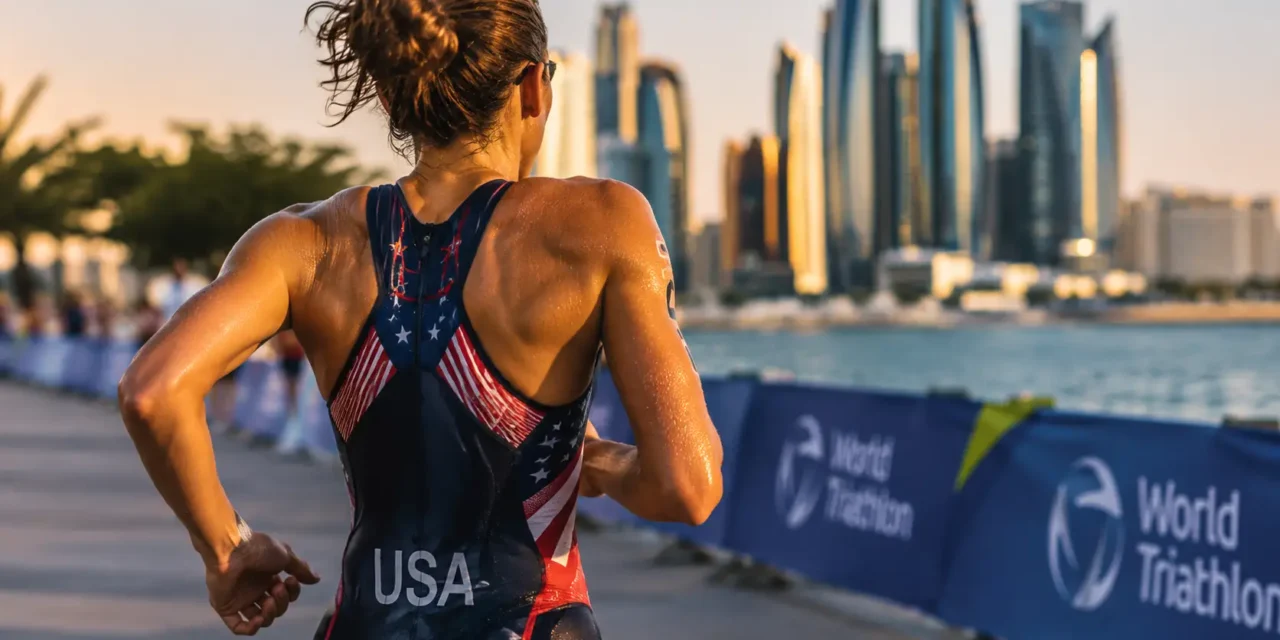
Pic: AI generated – the picture does not show Gwen Jorgensen.