

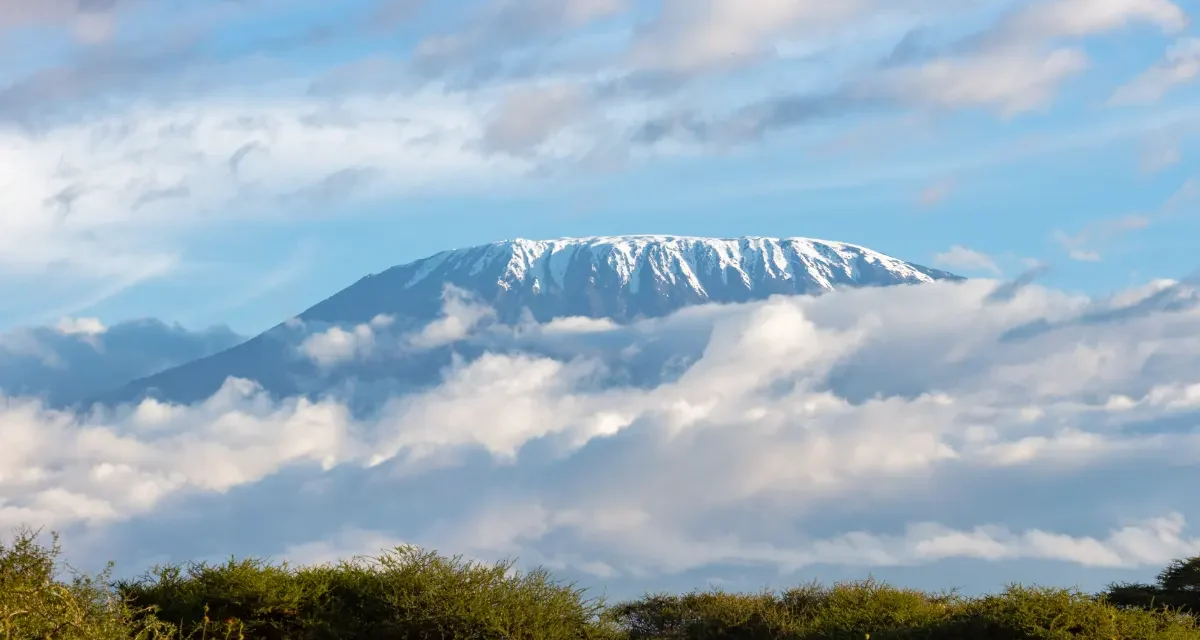
Two miles from the finish, Hannah Otto slipped in the mud and broke her tibia. She had already hauled her mountain bike to the 5,895-metre summit of Kilimanjaro. Now, with a broken leg and the final stretch still ahead, she faced a very different challenge. According to her account to Cyclingnews, she finished by pedalling with one leg.
But the most important number in this story isn’t 5,895. It isn’t the distance she covered with a broken bone. It’s 1,000.
That is how many bicycles Otto hopes to fund through an extraordinary expedition that took her to the roof of Africa and back in a single day. Her campaign, Beyond the Summit, aims to raise $165,000 for World Bicycle Relief, an organisation that provides bicycles to people for whom transport can determine access to education, employment and healthcare. On November 4, Otto completed what she describes as the first known single-day bicycle ascent and descent of Kilimanjaro by a woman. The injury made headlines. The summit made history, at least according to the records available to her team. But the reason she went to Tanzania was neither the fracture nor the record.
She chose to make one journey extraordinarily difficult in the hope of making 1,000 other journeys easier.
One mountain. One bicycle. One extraordinary day.
Kilimanjaro is not a mountain designed for cycling. At 5,895 metres, Africa’s highest peak presents a combination of altitude, unpredictable weather, loose rock and terrain that becomes increasingly hostile to anything on two wheels. Otto knew she would not be able to ride every metre. According to Cyclingnews, which reported on the expedition and spoke directly with Otto, the upper sections required her to carry the bike across rocky terrain near the snowy summit.
That detail matters, although perhaps not for the reason some might think. The achievement was never a continuous ride from the foot of the mountain to its peak. It was a bicycle ascent and descent, combining riding with carrying the machine where riding was impossible. On those sections, the bike stopped being transportation and became additional weight.
The mountain did not care whether she was a cyclist. She still had to get herself and the bicycle to the top.
The historical distinction is worth preserving. Otto’s claim concerns the first known single-day bicycle ascent and descent by a woman, rather than the first woman ever to cycle on Kilimanjaro. It has not been independently ratified as a speed record, and no verified finishing time is available. The reported accomplishment is completing the journey within one day.
Nor was this an unsupported solo expedition. Otto had completed an earlier acclimatisation ascent, while pre-expedition reporting described a carefully organised operation involving local guides, porters, a film crew and safety planning. None of that diminishes the physical challenge. It places the achievement in its proper context. Endurance at this altitude requires preparation, logistics and the work of people whose contributions are not always visible in the finish-line photograph.
The difference between choosing hardship and living with it
Long before the broken leg became the story, Otto had explained why she wanted to take a bicycle up Kilimanjaro. In her own account of the project, she drew a distinction between the challenges endurance athletes voluntarily pursue and the difficult journeys other people face simply to get through an ordinary day.
Athletes choose their suffering. They sign up for ultramarathons, race across deserts and climb mountains because the difficulty itself has meaning. They train for it, prepare for it and, when the event is over, return to lives in which that particular hardship was optional. For many people, travelling long distances to school, work or healthcare is not an adventure. It is a necessity. There is no finish-line medal, no personal best and no applause waiting at the end.
A bicycle can turn that necessity into something more manageable.
That is the thinking behind Otto’s partnership with World Bicycle Relief. The organisation works to improve mobility through bicycles, helping people cover distances that might otherwise consume hours of their day or limit their opportunities altogether. The contrast gives Otto’s expedition its real significance. Her journey was deliberately exceptional. The journeys she hopes to improve are ordinary, repeated day after day by people who have far fewer choices about how they travel. And that is where the numbers become important.
The campaign’s target is $165,000 to fund 1,000 bicycles. It is an ambition, not a confirmed result. The available reporting does not establish that the full amount has been raised or that 1,000 bicycles have already reached their recipients.
Reaching the summit was something Otto could accomplish through preparation, determination and physical effort. Reaching the fundraising target requires something different: other people deciding that her story is worth turning into action.
Two miles from the finish, everything changed
By the time Otto was approaching the end of her descent, the most demanding parts of Kilimanjaro were behind her. She had reached the summit, negotiated terrain that forced her to carry the bike and made her way back down the mountain. Then she slipped.
According to her account to Cyclingnews, the fall in the mud fractured her tibia. She subsequently reported that X-rays confirmed the injury. Rather than abandon the remaining distance, she said she completed it by pedalling with one leg. It is the kind of detail that can transform an endurance achievement into a headline. A mountain, a broken bone and an athlete refusing to stop. The ingredients are almost too perfect for the familiar sporting narrative of triumph over pain. But there is a difference between recognising determination and romanticising injury.
The available reporting does not establish the full medical circumstances or which alternatives were available to Otto at that moment. Continuing with a suspected fracture should not be presented as medically safe or as something other athletes ought to imitate.
Her achievement does not become greater because she was injured. And it would not have become less meaningful if she had needed to stop.
What makes the story remarkable is the scale of the undertaking, the preparation behind it and the purpose Otto attached to the attempt. The fracture was an unexpected and painful final chapter, not the point of the expedition.
The summit was the headline. The bicycles are the story.
There is a peculiar contradiction in endurance sport. The more extreme the suffering, the easier it becomes to attract attention. Broken bones, impossible distances and brutal conditions make compelling headlines. The quieter reasons behind those challenges can disappear beneath the drama. Otto’s Kilimanjaro expedition now faces exactly that risk.
The image of an athlete finishing a mountain descent with a fractured leg is memorable. It is also only one part of what happened. The campaign was conceived before the accident, and its purpose will continue long after the injury has healed. The mountain objective, according to Otto’s account, is complete. The fundraising objective remains a separate measure of success, one that needs to be judged by money raised and bicycles ultimately delivered rather than by the intensity of the athletic performance.
That distinction does not make the expedition less inspiring. It makes its ambition more interesting. Otto took one bicycle to the highest point in Africa. She carried it when she could not ride it, brought it back down and finished the journey despite an injury that might easily have overshadowed everything else. Now comes the part that cannot be completed by strength, endurance or stubbornness alone.
One bicycle made it up Kilimanjaro. The real victory would be putting 1,000 more on the road.