
“Women Are Too Weak.”
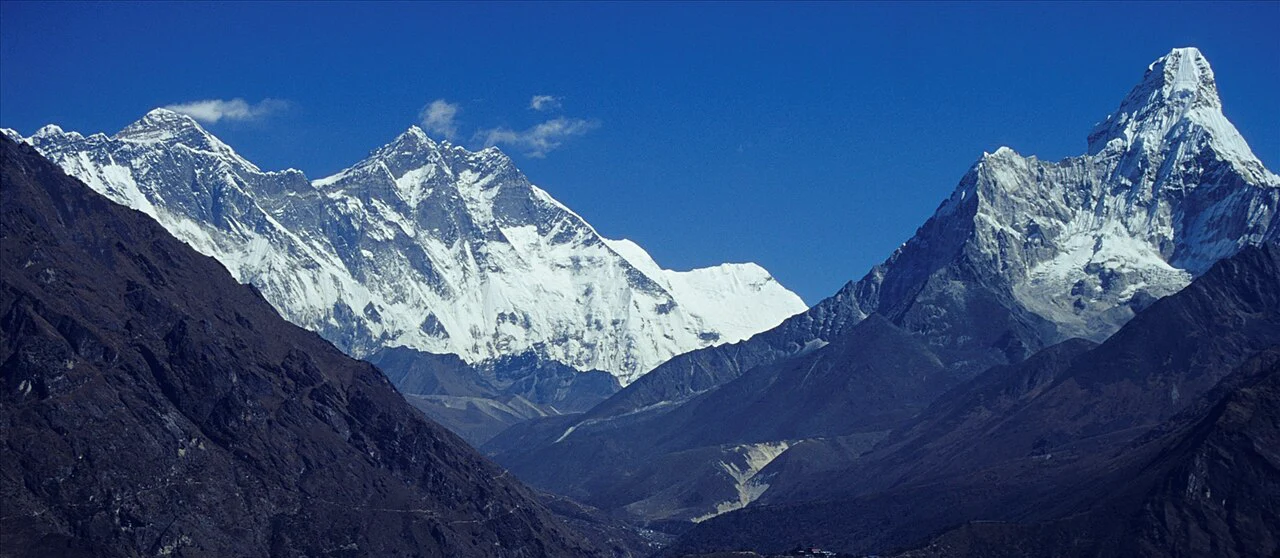
At 8,848 metres above sea level, the air contains only a fraction of the oxygen available below. Temperatures plunge far below freezing. Every step demands enormous effort. A single mistake can be fatal. Mount Everest has never cared how experienced you are, how famous you are or where you come from. It has claimed the lives of elite mountaineers, first-time climbers and world record holders alike. The mountain has always judged people by the same standard.
For a long time, however, people believed they knew something the mountain did not. They believed women did not belong there.
The assumption appeared in newspapers, scientific discussions and climbing circles throughout much of the twentieth century. High-altitude mountaineering was described as too demanding, too dangerous and too physically exhausting for women. The thin air, the extreme cold and the psychological pressure were said to exceed the limits of the female body. Men conquered mountains. Women admired them from below.
The belief sounded authoritative. It echoed many of the arguments already used to keep women out of marathon races, Olympic middle-distance events and countless other sports. Women were too fragile. Too emotional. Too weak. Every generation found new reasons to doubt women, new lines beyond which their bodies, courage or ambition were supposedly not meant to carry them. The mountains offered no opinion. They waited in silence, demanding the same answer from everyone who came: the next step.
On 16 May 1975, a 35-year-old Japanese climber reached the highest point on Earth. Her name was Junko Tabei. She became the first woman to stand on the summit of Mount Everest. The mountain had not treated her differently because she was a woman. Neither had the avalanche that buried her twelve days earlier.
“Women Don’t Belong Here.”
Junko Tabei did not grow up dreaming of becoming the first woman on Mount Everest.
She simply loved mountains.
Born in 1939 as the fifth of seven children, she discovered climbing almost by accident during a school trip to Mount Nasu. She was ten years old. The mountain was modest by Japanese standards, but standing on its slopes she felt something she would later struggle to describe. The higher she climbed, the quieter the world became. There were no crowds, no expectations, no applause waiting at the top. Only the next step, the next rock, the next breath.
Climbing remained an unusual hobby for a young Japanese woman in the 1950s. Equipment was expensive, clubs were dominated by men and the expectations placed on women were very different. Marriage, children and stability were considered sensible ambitions. Sleeping on frozen mountainsides was not.
Even among experienced climbers, Junko often found herself being underestimated before she had tied a single knot.
Some assumed she had joined expeditions to find a husband. Others questioned whether women should be climbing at all. Sponsors were difficult to convince. Funding was scarce. One company reportedly offered support in the form of kitchen appliances instead of money, as though a modern refrigerator might be more useful to a climber than ropes or tents.
Junko smiled politely, declined the assumptions and kept climbing.
When established climbing clubs offered few opportunities for women, she helped create one herself. In 1969 she co-founded the Ladies Climbing Club of Japan, whose motto was as simple as it was quietly rebellious.
Let’s go on an overseas expedition by ourselves.
Those last two words mattered.
By ourselves.
Not because they wanted to prove they were better than men.
Because they were tired of waiting for permission.
Six years later, that small club stood at the foot of the tallest mountain on Earth.
The Japanese Women’s Everest Expedition consisted of fifteen climbers, supported by Sherpas whose knowledge and experience made every expedition possible. The team represented something the mountaineering world had rarely seen before: women organising, fundraising, planning and leading an expedition to Everest on their own terms.
Many people remained unconvinced.
Some predicted they would turn back before reaching the upper camps.
Others wondered whether the expedition had been organised more as a publicity stunt than a serious attempt to reach the summit.
The mountain listened to none of it.
On 4 May 1975, while the team rested at Camp II, disaster struck.
A massive avalanche thundered down the mountain without warning.
Tents collapsed beneath tonnes of snow.
Junko Tabei was buried.
When rescuers finally pulled her free, she had lost consciousness.
Bruised and injured, she needed days before she could even stand again.
Most expeditions would have ended there.
Junko asked only one question.
When could they continue?
“The Mountain Never Asked.”
Nearly two weeks after the avalanche, Junko Tabei left Camp V and began the final ascent.
There is no cheering in the death zone.
No spectators.
No finish line.
Only darkness, frozen rock and the steady rhythm of breathing through impossibly thin air.
Above 8,000 metres, every movement becomes a decision. Every unnecessary step wastes precious energy. Every minute spent in the death zone increases the risk of never coming back. The summit is only halfway. Most mountaineering accidents happen on the descent, when exhaustion replaces excitement and tiny mistakes become irreversible.
Junko climbed slowly.
Not because she wanted to make history.
Because that is how you survive.
On 16 May 1975, after weeks of climbing and twelve days after being buried by an avalanche, she stepped onto the highest point on Earth.
For a few brief moments there was nowhere higher a human being could stand.
The summit itself looked exactly as it had the day before.
The snow did not change.
The wind did not stop.
The mountain offered no congratulations.
It had accepted another climber.
The celebration happened thousands of kilometres away.
Newspapers around the world announced that the first woman had reached the summit of Mount Everest. Photographs of Junko Tabei appeared on front pages. Interviews followed. She became an international symbol almost overnight.
Yet the title never seemed to interest her as much as everyone else.
Years later she would say that she had never climbed because she wanted to be the first woman on Everest.
She climbed because she loved mountains.
That distinction matters.
History celebrated her for crossing a line between men and women.
Junko had spent her life trying to ignore that line.
She did not see mountains as male or female.
They were simply there.
Waiting to be climbed.
And once she stood on the summit, another uncomfortable truth became impossible to ignore.
If the highest mountain on Earth could be climbed by a woman, perhaps the mountain had never been the obstacle.
Perhaps the obstacle had always been the people standing at its foot, insisting she should never try.
But one successful climb can always be dismissed as an exception.
One woman can be called extraordinary.
A movement is much harder to explain away.
“One Woman Can Be Dismissed.”
History has a curious habit.
When a woman achieves something no woman has done before, people often treat her as an exception rather than evidence. She becomes extraordinary, unique, impossible to compare. The old assumptions survive because surely no one else could do the same.
That happened after Junko Tabei reached the summit of Everest.
People admired her determination.
They praised her courage.
They celebrated the first woman.
Few stopped to ask a more unsettling question.
What if she wasn’t the exception?
Three years later, another group of women quietly answered that question.
This time, the challenge was not the highest mountain on Earth.
It was, in many ways, an even more dangerous one.
Annapurna.
At 8,091 metres, Annapurna is lower than Everest, but altitude tells only part of the story. The mountain is infamous for unstable snow, relentless avalanches and steep, exposed faces. For decades, it carried one of the highest fatality rates of any of the world’s fourteen eight-thousanders. Climbers respected it with a mixture of admiration and fear.
In 1978, an American biochemist named Arlene Blum stood at its base.
She had spent years climbing some of the world’s most demanding peaks, but the greatest obstacle had rarely been the mountain itself.
It was getting there.
When she began climbing in the 1960s, women were routinely excluded from major expeditions. The explanation was almost always the same. Women were considered physically weaker, emotionally unpredictable or simply a distraction. Some expeditions explicitly advertised that they were looking for ‘climbers’. Everyone understood that meant men.
Blum refused to accept that definition.
She climbed anyway.
She earned respect anyway.
Eventually, she stopped asking for a place on other people’s expeditions.
She built her own.
Long before the team reached Annapurna, the expedition had become a public experiment. Reporters wanted to know whether the women would quarrel, lose their nerve or discover that leadership became too heavy somewhere above base camp. Questions rarely asked of male teams followed them all the way to the mountain.. Experienced Sherpas provided the expertise and support that every serious Himalayan expedition depended on, but the leadership belonged to the team itself.
The newspapers loved the idea.
Not always for the right reasons.
Some reports focused less on the climbing than on whether an all-female expedition was sensible at all. Others wondered if the women would argue, lose confidence or abandon the attempt when conditions became difficult. Questions that had followed male expeditions for decades suddenly became headlines simply because the climbers were women.
Arlene Blum answered them with a sentence that would become one of the defining quotes of women in mountaineering.
‘A woman’s place is on top.’
It was witty.
It made headlines.
But it also missed something important.
Arlene Blum was not trying to prove that women belonged above men.
She was trying to prove they belonged on the mountain.
Exactly where they had always belonged.
“Courage Was Never the Question.”
The expedition reached higher.
Not everyone would come home.
On 15 October 1978, Vera Watson and Alison Chadwick-Onyszkiewicz disappeared high on Annapurna.
The mountain gave them no second chance.
The search found no survivors.
The triumph of the expedition became inseparable from its grief.
For many observers, the tragedy seemed to confirm what they had believed all along.
Perhaps the critics had been right.
Perhaps women had pushed too far.
Perhaps they had taken risks they should never have taken.
But the mountain had heard those arguments before.
It had buried men for generations.
George Mallory.
Dougal Haston.
Countless others whose names are known only to their families and climbing partners.
Mountaineering has never been safe.
Not for women.
Not for men.
The difference was often found somewhere else.
When men died in the mountains, newspapers usually wrote about ambition, exploration and sacrifice.
When women died, the question was sometimes whether they should have been there in the first place.
The same accident.
A different conclusion.
Arlene Blum refused to accept that conclusion.
The loss of her teammates stayed with her for the rest of her life, but she never allowed their deaths to become an argument against women climbing mountains.
That would have been the cruelest injustice of all.
Because Vera Watson and Alison Chadwick-Onyszkiewicz had not died because they were women.
They had died because they were mountaineers.
The distinction matters.
Every climber who steps onto an eight-thousander makes the same silent agreement with the mountain.
There are no guarantees.
No promises.
No special treatment.
Only weather.
Snow.
Rock.
Altitude.
And decisions.
Good ones increase the chance of coming home.
Bad ones reduce it.
The mountain never cared who made them.
As the years passed, more women kept arriving.
Not because the mountains had become easier.
Because the excuses had become harder to defend.
One expedition could still be dismissed as remarkable.
Dozens could not.
Soon, women were no longer trying to prove they belonged in the Himalayas.
They were redefining what was possible there.
“Women Don’t Become Legends.”
If Junko Tabei had been an exception, the story might have ended in 1975. History could have filed her away as an extraordinary woman who achieved an extraordinary thing. The old beliefs would have survived, comforted by the idea that once in a lifetime, someone simply comes along who breaks every rule.
But mountains have a habit of exposing weak arguments.
Three years after Junko stood on Everest, the Polish climber Wanda Rutkiewicz stood on the same summit. She became the first European woman to reach the top of the world. Two years later, she climbed Mount Nanga Parbat. In 1986, she became the first woman ever to summit K2, a mountain so technically demanding that many mountaineers considered it more difficult than Everest itself. There was no longer a single woman proving that she belonged. There were many, each pushing the limits a little further until the limits themselves began to disappear.
Rutkiewicz was never interested in being careful enough to fit other people’s expectations. She climbed with many of the greatest alpinists of her generation, often in places where almost nobody, male or female, had ever stood before. She once remarked that she wanted to live life intensely because none of us knows how much time we have. Looking back, the words feel haunting. In 1992, while attempting Kangchenjunga, the world’s third-highest mountain, Wanda Rutkiewicz disappeared. Her body was never found. She was fifty years old.
The headlines were familiar.
Another woman.
Another mountain.
Another debate about whether she should have been there.
When George Mallory disappeared on Everest, his unfinished climb became a legend. When male mountaineers failed to return, their deaths were written into the mythology of exploration, ambition and sacrifice. When women died on the same mountains, the story too often changed. Their loss was not treated only as the price of an unforgiving sport, but as evidence that women should never have entered it.
The mountains never made that distinction.
By the late 1980s, something remarkable had happened. The question was no longer whether women could survive in the death zone. They already had. Again and again. The question had become how far they could go.
“Women Can’t Have It All.”
As more women reached the world’s highest peaks, the questions slowly began to change.
People no longer argued that women were physically incapable of climbing Everest. The evidence had become overwhelming. Instead, they found a different argument.
What kind of woman would choose a mountain over her family?
No climber embodied that question more than Alison Hargreaves.
Born in England in 1962, Hargreaves belonged to a new generation of alpinists. She sought difficult routes, long climbs and self-imposed limits. She preferred to climb with as little equipment as possible, relying on experience rather than support. In 1995, she reached the summit of Mount Everest without bottled oxygen and without the help of Sherpas above base camp, one of the purest ascents of the mountain ever completed.
It was an extraordinary achievement. For many mountaineers, it placed her among the finest climbers of her generation.
But outside the climbing community, another story quickly took over.
Alison Hargreaves was a mother of two young children.
Newspapers debated whether she had been irresponsible. Television interviews rarely focused on altitude, preparation or technical skill. Instead, they returned to the same question.
How could a mother take such a risk?
It is difficult to imagine the same conversation surrounding Reinhold Messner, Jerzy Kukuczka or any of the countless fathers who spent months away from home pursuing the highest peaks on Earth. Their ambition was admired. Their children were rarely mentioned. Hargreaves’ achievements, by contrast, were repeatedly measured against her role as a mother rather than against those of her fellow climbers.
Only a few months after Everest, Alison Hargreaves reached the summit of K2.
Then the weather changed.
On the descent, one of the worst storms in the mountain’s history swept across the upper slopes. Hargreaves and several other climbers disappeared into the clouds. None of them returned.
The mountain had claimed more lives.
As it always had.
But once again, the headlines sounded different.
Many mourned an exceptional climber. Others questioned whether she should ever have attempted the climb. The debate was no longer about mountaineering. It was about motherhood.
The irony was impossible to ignore.
For generations, women had been told they were too weak to climb the world’s highest mountains. Once they proved they were strong enough, they were criticised for wanting to climb them at all.
The summit had changed.
The prejudice had simply found a new route.
Why This Story Matters
For much of the twentieth century, high-altitude mountaineering was considered one of the last frontiers reserved for men. Women were described as too weak, too emotional or simply unsuited to survive in the world’s highest mountains. Every successful ascent was treated as an exception rather than evidence that the assumptions themselves were wrong.
From Junko Tabei’s historic Everest summit to Arlene Blum’s pioneering expedition on Annapurna, from Wanda Rutkiewicz and Alison Hargreaves to Gerlinde Kaltenbrunner, Edurne Pasaban and Lhakpa Sherpa, women repeatedly demonstrated that the mountains demanded the same qualities from everyone: skill, preparation, endurance and sound judgement.
The barriers were never carved into the rock. They existed in the expectations of the people looking up from below.
The mountain never cared who climbed it.
“A Record Should Make You Famous.”
By the time Lhakpa Sherpa first stood on the summit of Everest in 2000, women had already proved that they could climb the highest mountains, lead expeditions, survive the death zone and belong among the finest alpinists in the world. Yet another boundary remained. Whose achievement would be seen, remembered and rewarded? Lhakpa had grown up in a remote village in Nepal, close enough to the great Himalayan expeditions to watch them pass, but far from the money, education and opportunities that carried foreign climbers towards the peaks. As a girl, she was not sent to school. When she wanted work on expeditions, she sometimes had to present herself as a boy simply to be considered. The mountains rose around her, but the path towards them had been built for someone else.
She climbed anyway. In 2000, she became the first Nepali woman to reach the summit of Everest and return safely. Then she went back. Again and again. While celebrated climbers built careers from fewer ascents, Lhakpa moved between two worlds. On Everest, she crossed glaciers, fixed her breathing in the thin air and stood higher than almost every person alive. In the United States, she washed dishes, stocked supermarket shelves, cleaned houses and raised her children while surviving an abusive marriage. Her record grew largely beyond the attention of the public whose expeditions had depended on Sherpa knowledge for generations.
In 2022, she reached the summit for the tenth time, more than any other woman in history. The achievement finally drew wider attention, but attention is not the same as recognition. Two years later, Lucy Walker’s documentary Mountain Queen: The Summits of Lhakpa Sherpa arrived on Netflix and placed the woman behind the record at the centre of the frame. The film did not present Everest as the only mountain she had climbed. There were other summits too: poverty, exclusion, migration, violence and the exhausting work of building a life in which her daughters might be given choices she had never received.
Then, on 17 May 2026, Lhakpa returned to Everest and reached the summit for an eleventh time. The number changed. The deeper truth did not. One of the most accomplished Everest climbers in history had spent years performing ordinary jobs while extraordinary achievements remained almost invisible. The mountain had recognised her ability every time she reached its summit. The rest of the world had taken much longer to look up.
Historical Record
- 16 May 1975: Junko Tabei became the first woman to reach the summit of Mount Everest.
- 1978: Arlene Blum led the American Women’s Himalayan Expedition to Annapurna, where Vera Watson and Alison Chadwick-Onyszkiewicz reached the summit before losing their lives during the descent.
- 1978: Wanda Rutkiewicz became the first European woman to summit Mount Everest.
- 1986: Wanda Rutkiewicz became the first woman to summit K2.
- 1988: Lydia Bradey became the first woman to climb Mount Everest without supplemental oxygen.
- 1995: Alison Hargreaves summited Everest without supplemental oxygen and later died during her descent from K2.
- 2010: Edurne Pasaban became the first woman to complete all fourteen eight-thousanders.
- 2011: Gerlinde Kaltenbrunner became the first woman to climb all fourteen eight-thousanders without supplemental oxygen.
- 2022: Lhakpa Sherpa completed her tenth ascent of Mount Everest, extending the women’s record. She has since increased this record even further.
Women in this Chapter
- Junko Tabei – First woman to summit Mount Everest (1975)
- Arlene Blum – Leader of the American Women’s Himalayan Expedition
- Vera Watson – Member of the Annapurna expedition
- Alison Chadwick-Onyszkiewicz – Member of the Annapurna expedition
- Wanda Rutkiewicz – First woman to summit K2
- Lydia Bradey – First woman to summit Everest without supplemental oxygen
- Alison Hargreaves – Everest without supplemental oxygen and K2 summiteer
- Edurne Pasaban – First woman to climb all fourteen eight-thousanders
- Gerlinde Kaltenbrunner – First woman to climb all fourteen eight-thousanders without supplemental oxygen
- Nives Meroi – All fourteen eight-thousanders without supplemental oxygen
- Lhakpa Sherpa – Record holder for the most ascents of Mount Everest by a woman
Sources
- Guinness World Records – Most Ascents of Everest by a Woman
- Guinness World Records – Lhakpa Sherpa’s Eleventh Everest Ascent
- Netflix – Mountain Queen: The Summits of Lhakpa Sherpa
- The Guardian – Lhakpa Sherpa and Mountain Queen
- Arlene Blum – Annapurna: A Woman’s Place
- American Alpine Journal – Annapurna: A Woman’s Place
- Guinness World Records – Alison Hargreaves’ Everest Ascent Without Supplemental Oxygen
- Guinness World Records – Milestones in Everest History
Pic Source: Von Dnor – Eigenes Werk, CC BY-SA 3.0, https://commons.wikimedia.org/w/index.php?curid=1994838