
“Women Are Too Weak.”
At 8,848 metres above sea level, the air contains only a fraction of the oxygen available below. Temperatures plunge far below freezing. Every step demands enormous effort. A single mistake can be fatal. Mount Everest has never cared how experienced you are, how famous you are or where you come from. It has claimed the lives of elite mountaineers, first-time climbers and world record holders alike. The mountain has always judged people by the same standard.
For a long time, however, many people believed they knew something the mountain did not. They believed women did not belong there. They imagined that the highest peaks demanded qualities women simply did not possess: the strength, endurance and determination to survive where so many men had failed. The mountain never shared that opinion. It remained silent, waiting for the next climber to prove them right or wrong.
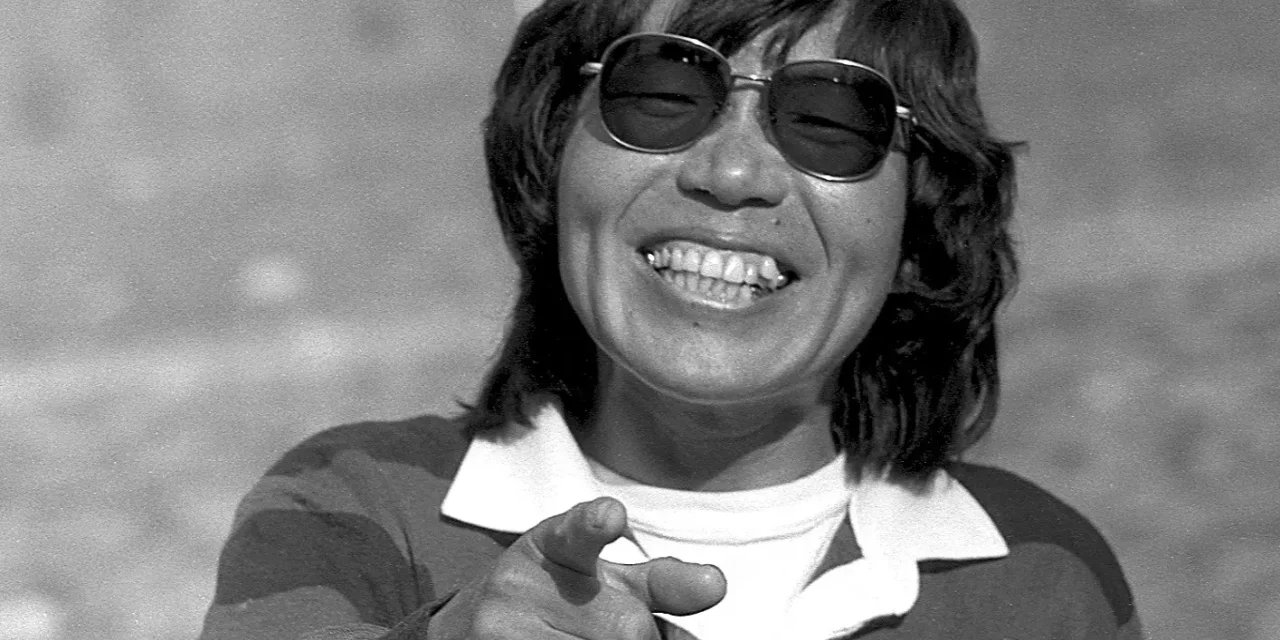
On 16 May 1975, a 35-year-old Japanese climber reached the highest point on Earth. Her name was Junko Tabei. She became the first woman to stand on the summit of Mount Everest. The mountain had not treated her differently because she was a woman. Neither had the avalanche that buried her twelve days earlier.
“Women Don’t Belong Here.”
Junko Tabei did not grow up dreaming of becoming the first woman on Mount Everest. She simply loved mountains.
Born in 1939 as the fifth of seven children, she discovered climbing almost by accident during a school trip to Mount Nasu. She was ten years old. The mountain was modest by Japanese standards, but standing on its slopes she felt something she would later struggle to describe. The higher she climbed, the quieter the world became. There were no crowds, no expectations, no applause waiting at the top. Only the next step, the next rock, the next breath.
Climbing remained an unusual hobby for a young Japanese woman in the 1950s. Equipment was expensive, clubs were dominated by men and the expectations placed on women were very different. Marriage, children and stability were considered sensible ambitions. Sleeping on frozen mountainsides was not. Even among experienced climbers, Junko often found herself being underestimated before she had tied a single knot.
Years later, she remembered the reaction when she and her fellow climbers announced their plans for an all-women expedition. “Most of the men in the alpine community were against our plan, saying that it would be impossible to go to Everest on a women’s-only expedition.”
Others questioned why married women or mothers should climb at all. Sponsors were difficult to convince, funding was scarce and many people expected the expedition to fail before it had even begun.
Some assumed she had joined expeditions to find a husband. Others questioned whether women should be climbing at all. Sponsors were difficult to convince. Funding was scarce. One company reportedly offered support in the form of kitchen appliances instead of money, as though a modern refrigerator might be more useful to a climber than ropes or tents.
Junko smiled politely, declined the assumptions and kept climbing.
When established climbing clubs offered few opportunities for women, she helped create one herself. In 1969 she co-founded the Ladies Climbing Club of Japan, whose motto was as simple as it was quietly rebellious. Let’s go on an overseas expedition by ourselves. Those last two words mattered. By ourselves. Not because they wanted to prove they were better than men. Because they were tired of waiting for permission.
Six years later, that small club stood at the foot of the tallest mountain on Earth. The Japanese Women’s Everest Expedition consisted of fifteen climbers, supported by Sherpas whose knowledge and experience made every expedition possible. The team represented something the mountaineering world had rarely seen before: women organising, fundraising, planning and leading an expedition to Everest on their own terms.
Many people remained unconvinced. Some predicted they would turn back before reaching the upper camps. Others wondered whether the expedition had been organised more as a publicity stunt than a serious attempt to reach the summit. The mountain listened to none of it.
On 4 May 1975, while the team rested at Camp II, disaster struck. A massive avalanche thundered down the mountain without warning. Tents collapsed beneath tonnes of snow. Junko Tabei was buried. When rescuers finally pulled her free, she had lost consciousness. Bruised and injured, she needed days before she could even stand again. Most expeditions would have ended there. Junko had other plans. As soon as she knew that everyone had survived, she was determined to continue. She refused to leave the mountain, recovered for several days and prepared to climb again.
Nearly two weeks after the avalanche, Junko Tabei left Camp V and began the final ascent.
There is no cheering in the death zone. No spectators. No finish line. Only darkness, frozen rock and the steady rhythm of breathing through impossibly thin air. Above 8,000 metres, every movement becomes a decision. Every unnecessary step wastes precious energy. Every minute spent in the death zone increases the risk of never coming back. The summit is only halfway. Most mountaineering accidents happen on the descent, when exhaustion replaces excitement and tiny mistakes become irreversible.
Junko climbed slowly. Not because she wanted to make history. Because that is how you survive.
On 16 May 1975, after weeks of climbing and twelve days after being buried by an avalanche, she stepped onto the highest point on Earth. For a few brief moments there was nowhere higher a human being could stand. The summit itself looked exactly as it had the day before. The snow did not change. The wind did not stop. The mountain offered no congratulations. It had accepted another climber.
The newspapers loved the headline. The first woman on Everest.
Photographs of Junko Tabei appeared around the world. Interviews followed. Within days, she had become far more than a mountaineer. She had become a symbol. Junko herself never seemed particularly interested in that role. Years later, she explained that she had never climbed because she wanted to be the first woman on Mount Everest. She climbed because she loved mountains.
Looking back, that may have been the most remarkable part of her achievement. Everyone else saw a woman standing where no woman had stood before. Junko saw a mountain.
And she kept climbing.
Over the following decades, Tabei completed the Seven Summits, reaching the highest mountain on every continent. Even that was not enough to satisfy her curiosity. She set herself a new goal: to climb the highest peak in every country she could visit. Wherever she travelled, she preferred quiet trails to public ceremonies and mountains to interviews.
As the years passed, another change troubled her. Everest itself was changing. Expeditions left behind discarded oxygen bottles, torn tents and abandoned equipment. The mountain that had once inspired such wonder was slowly becoming polluted. Tabei began organising clean-up expeditions and encouraged climbers to leave the Himalayas in better condition than they had found them. Reaching the summit, she believed, also meant accepting responsibility for the mountain.
In 2002, she was diagnosed with breast cancer. After treatment, she returned to climbing. She continued leading expeditions, speaking to young climbers and exploring mountains well into her seventies. When she died in 2016, tributes came from around the world. Yet those who had known her best remembered not the records, but her quiet determination, her humility and her lifelong belief that mountains were there to be respected, not conquered.
Perhaps that is why Junko Tabei’s achievement still feels different today. She did not climb Everest to prove that women belonged there. She climbed because, in her mind, they already did.
The Historical Record
What happened on Mount Everest in 1975?
- On 16 May 1975, Junko Tabei became the first woman to reach the summit of Mount Everest.
- She was a member of the Japanese Women’s Everest Expedition, the first all-female team to attempt the mountain.
- Twelve days before reaching the summit, an avalanche buried Camp II. Tabei lost consciousness but survived and continued the expedition after recovering.
- She reached the summit alongside Sherpa Ang Tshering.
- Tabei’s ascent disproved the widespread belief that women were physically unsuited to the world’s highest mountains.
- She later completed the Seven Summits, climbing the highest mountain on every continent.
- In the years that followed, she became an advocate for protecting the Himalayan environment, organising clean-up expeditions on Mount Everest.
- Junko Tabei died in 2016 at the age of 77, leaving a legacy that inspired generations of mountaineers around the world.
Women in This Chapter
- Junko Tabei: The first woman to reach the summit of Mount Everest on 16 May 1975.
- Eiko Hisano: Leader of the Japanese Women’s Everest Expedition, who organised and led the pioneering all-women team.
- Hiroko Hirano: One of the expedition members who supported the team’s ascent and helped establish the success of the first women’s Everest expedition.
Why This Story Matters
For much of the twentieth century, mountaineering was presented as one of the last frontiers reserved for men. Women were considered too weak, too fragile or too emotional to survive at the highest altitudes. When Junko Tabei reached the summit of Mount Everest in 1975, she disproved those assumptions without ever setting out to argue against them.
What makes her story remarkable is not only that she became the first woman to stand on the highest point on Earth. It is the quiet determination with which she continued climbing afterwards. She never treated Everest as the finish line. She saw it as one mountain among many.
Perhaps that is why her legacy has endured. Junko Tabei did not ask whether women belonged in the mountains. She climbed as though they always had.
The mountain never cared who climbed it.
Sources
- American Alpine Club – Review of Honouring High Places: The Mountain Life of Junko Tabei
- Outside – A Final Interview With Junko Tabei
- Los Angeles Times – Japanese Woman Scales Mountains While Ignoring Society’s Stereotypes
- American Alpine Journal – Going Manless: Looking Back, Forward, and Inward
Pic Source: Jaan Künnap – Own work, CC BY-SA 4.0, https://commons.wikimedia.org/w/index.php?curid=79605149